Getting started with RV camping: a practical beginner’s guide
Getting started with RV camping is easier when you treat your first trips as a chance to learn, rather than a test you must pass perfectly. You do not need to sell your house, buy every gadget, or drive across the country to find out whether you enjoy having a home on wheels. Start with a manageable trip, pay attention to your ordinary routines, and build from what you learn.

In this guide
- Decide what you want the RV to make possible
- Choose a small first experiment
- Learn your rig before collecting more equipment
- Pack for the trip you are taking
- Reserve a campsite that fits your actual setup
- Build a travel day with room to breathe
- Use a real first-trip budget
- If full-time RV living is the goal
- Review the trip before planning the next one
- A four-week preparation plan you can actually use
- Questions to ask at an RV rental or delivery walkthrough
- Set up four packing zones
- An arrival conversation that prevents confusion
- Make departure a separate project from breakfast
- Use a practice budget to compare choices
- Plan for three common disruptions
- Beginner questions worth settling early
- Reliable planning resources
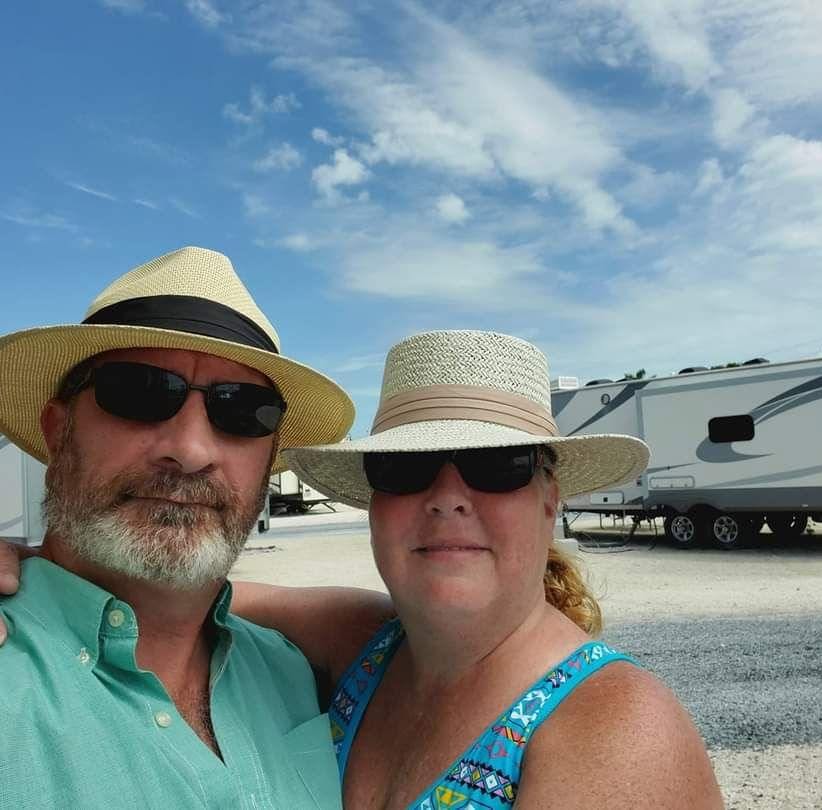
We’re Joe and Jana Martin. We spent four years RVing full-time, including eight months in the Florida Keys, before taking a break to homestead. Now we’re preparing for our next chapter. That experience shapes this site’s approach: freedom matters, and so does a plan that works when the dishes need washing and the weather keeps you inside.
This guide helps you work through the first decisions in a useful order. Use it for a weekend adventure, a seasonal stay, or the beginning of full-time travel. You can move at your own pace.
Decide what you want the RV to make possible
Begin with the life you want to experience, rather than a particular floor plan. Are you hoping for inexpensive weekends close to home, longer visits with family, warm-weather winters, or a complete change in where you live? Those are different jobs for an RV. The same rig and travel schedule will not suit every one of them equally well.
Write down three things your trips need to include and three things you can happily do without. Perhaps you need a comfortable bed, room for pets, and a quiet workspace. Perhaps a large television and an outdoor kitchen would simply take up space. Be specific enough that your list can help you compare choices later.
Also imagine an ordinary rainy Tuesday. Where will each person sit? Can you cook while someone else works? Where do wet shoes go? A setup that makes everyday life comfortable gives you a stronger foundation than one chosen entirely around a beautiful campsite photograph.
Choose a small first experiment
If you do not own an RV, renting a suitable type can help you discover what you enjoy before making a purchase. Ask for a complete demonstration, understand the rental agreement and insurance arrangements, and practice operating the vehicle and its systems. An unfamiliar RV deserves learning time before the first highway miles.
If you already own one, consider a driveway rehearsal followed by a nearby campground. A short trip close to supplies and help reduces the number of new problems you face at once. You can practice packing, parking, preparing meals, and using the bathroom without adding a demanding sightseeing itinerary.
Choose the length of the stay around the questions you want answered. A weekend might reveal a difficult bed or awkward kitchen. A longer trial may reveal laundry, work, and storage issues. Neither experiment must prove that you are ready for every kind of travel.
Learn your rig before collecting more equipment
Find the owner’s manuals for the RV and its major systems. Learn where essential controls and shutoffs are, which tasks are yours to perform, and which problems call for a qualified technician. Ask a dealer, rental provider, or instructor to demonstrate anything you cannot explain back clearly.
Create separate arrival and departure checklists based on those instructions. A good checklist names an action you can actually verify, such as securing a particular compartment, rather than saying “check everything.” Keep it accessible when you travel, and revise it when you discover a missing step.
Do not use another person’s equipment settings as a substitute for your own documentation. Electrical connections, tires, loading, leveling, appliances, and towing arrangements vary. The questions are often similar, but the correct procedure belongs to your vehicle and equipment.
Pack for the trip you are taking
Start with required operating equipment, basic clothing, simple meals, toiletries, bedding, and the items your household needs every day. Then stop and check what fits securely. Storage space is not the same as permission to carry unlimited weight.
Make a short list of things you can buy locally if the need arises. This is especially helpful with kitchen accessories and organizational products. After a few meals, you will know more about your counter space and cooking habits than you could learn from an enormous shopping list.
For every optional item, ask where it will ride, how often you will use it, and whether something already packed can do the job. Include pets in the exercise: food, litter or other care supplies, carriers, records, and travel routines all need room. Keep important documents and essential personal items easy to reach.
Reserve a campsite that fits your actual setup
Choose a first campground for practical ease. Check the access roads, the site’s stated vehicle limits, parking arrangement, available services, and arrival process. A campground’s general description does not establish that every site fits your particular RV.
The National Park Service advises RV travelers to check individual parks for size restrictions and site suitability, including room for slide-outs. Apply that habit anywhere you book: give the campground your actual equipment dimensions and ask how its measurements are defined. A tow vehicle or extra car may need separate parking.
Read the cancellation terms and total charges before reserving. Save the confirmation, the correct entrance, the campground’s contact information, and any late-arrival instructions. Do this while you still have reliable service. Your first arrival is much easier when you are not searching several inboxes at the gate.
Build a travel day with room to breathe
Plan your first driving day conservatively. Mapping estimates are only part of the day; loading, fuel stops, meals, traffic, parking, and setup all take time. Choose a route appropriate for the vehicle, not simply the shortest route suggested for a passenger car.
Plan to arrive with daylight available for inspecting the site and following your setup procedure. If the weather, road, or your energy makes the plan uncomfortable, change it. Reaching a campground later than planned is a reason to communicate and reassess, not a reason to rush.
Agree on a parking routine before you arrive. Decide who will drive, who will guide if needed, what signals mean, and when to stop. If the driver loses sight of the guide or either person is unsure, stop and get clarity. Make the goal an uneventful arrival rather than an impressive performance.
Use a real first-trip budget
Include the campsite, fuel, rental or vehicle expenses, food, supplies, activities, and any bills that continue at home. Separate one-time setup purchases from recurring travel expenses so that a costly shopping week does not become your assumed monthly budget forever.
Keep a repair and change-of-plan allowance appropriate to your circumstances. An unexpected extra night, a service appointment, or a trip home can affect the cost even when the original itinerary was modest. Use actual quotes and your own records rather than someone else’s monthly total.
During the trial trip, record what you spend and why. If eating out increases because the kitchen is disorganized, a simpler meal plan might help more than a new campground membership. Your numbers should point toward useful decisions.
If full-time RV living is the goal
Treat a full-time transition as a separate project after the initial camping experiment. Review income, insurance, healthcare access, mail, legal residence, vehicle registration, storage, home responsibilities, and plans for a change in circumstances. Check questions with the relevant providers and qualified professionals rather than relying on a general travel article.
Downsize by working through how you use belongings, not by trying to fit an entire house into smaller cupboards. Keep a temporary holding area for uncertain items when possible. A season of travel can teach you which possessions matter more clearly than a rushed weekend of decisions.
Give the transition a return or pause option. You may love traveling and still need a different pace, rig, or arrangement later. Building flexibility into the plan supports freedom; it does not weaken your commitment.
Review the trip before planning the next one
After you return, ask what worked, what was difficult, and what you would change. Separate a skill you can practice from a design problem you cannot easily fix. Awkward backing may call for instruction and rehearsal. An inaccessible bathroom with the slides in may be a floor-plan issue.
Choose just a few improvements for the next trip. Update the packing list, simplify an arrival step, or try a longer stay in one place. Small experiments are easier to learn from than changing every part of the experience at once.
Your next step can be simple: pick a nearby campground, write your three must-haves, and schedule time to learn the rig. Getting started with RV camping does not require certainty about the next ten years. It requires a thoughtful first trip and a willingness to adjust.
A four-week preparation plan you can actually use
Work backward from a short trip rather than from an imaginary date when you will know everything. In the first week, agree on the experiment: who is going, how many nights you will stay, how far you are comfortable traveling, and what you want to learn. Choose two or three questions, such as whether you can sleep comfortably, prepare ordinary meals, and manage the arrival routine together. Write down the answers you need before spending money on optional accessories.
In the second week, focus on the vehicle and reservation. Collect manuals, arrange instruction or service as needed, and confirm that the campground can accommodate your setup. Check the route and save the arrival information. If you are renting, find out how much time the pickup demonstration will take and avoid scheduling a demanding drive immediately afterward. Leave enough time to ask questions without feeling that you are holding up the rest of the itinerary.
Use the third week for a packing rehearsal. Put your intended travel items in the RV, secure them appropriately, and run through meals, bedtime, morning coffee, and a departure checklist while parked. Notice what blocks access or takes too long to put away. In the final week, confirm the booking, conditions, personal supplies, and backup arrangements. The schedule is adjustable; what matters is that the last evening is a check, rather than the first time you look at everything.
Questions to ask at an RV rental or delivery walkthrough
A useful demonstration should leave you able to find the instructions again later. Ask where the manuals are stored and whether the provider supplies a vehicle-specific checklist. Take notes in your own words. With permission, record demonstrations you may need to review, but do not let a recording replace understanding the essential steps before you leave.
Ask the provider to show you the system identification and the correct way to connect the services you intend to use. Learn which controls operate which appliance, how to recognize normal indicators, and what to do if a system does not behave as expected. Ask where the relevant shutoffs and safety equipment are, which tasks require assistance, and whom to contact after business hours. You are not trying to learn every repair; you are establishing a clear boundary between normal operation and a situation that needs help.
Also discuss practical handover details: the fuel or tank condition expected on return, cleaning requirements, mileage or generator provisions if applicable, permitted drivers, roadside assistance arrangements, and how damage or breakdowns are handled. Read the actual agreement rather than assuming another renter’s experience applies. Before driving away, check that you can access the reservation, support number, and return instructions without needing to search an unfamiliar customer portal.
Set up four packing zones
Organizing around tasks makes more sense than filling every cupboard from left to right. Create an arrival zone for the items needed when you first park, an everyday zone for clothes and household supplies, a departure zone for the checklist and travel essentials, and a document zone for information you may need quickly. The exact locations depend on your RV, but the purpose is to avoid unpacking half the vehicle to reach one essential item.
In the kitchen, plan a few repeatable meals using overlapping ingredients. If breakfast and lunch use the same bread, fruit, or cooked protein, you may need fewer containers and fewer shopping decisions. Pack the tools those meals require and leave the specialty appliances for a later trip. Check refrigerator storage, cooling instructions, and how food will be secured for travel using the appliance and RV guidance.
Keep a simple packing note with three columns: packed, used, and needed next time. An item used once may still be essential, while an item used every day may be awkwardly located. The point is not to get rid of everything that stayed in a cupboard. It is to identify which supplies protect your trip, which make ordinary life easier, and which were added because someone else said every RVer must own them.
An arrival conversation that prevents confusion
Before entering the campground, review who will handle each part of arrival. One person might deal with check-in while the other reviews the reservation and site instructions. If you travel alone, plan where you can stop appropriately to read the details before continuing. Do not make the first conversation about responsibilities while a line of vehicles is waiting behind you.
At the assigned site, pause before setting up. Look at the approach, overhead and side clearance, ground conditions, service locations, and the space needed for doors or slides. If something does not match the reservation or looks unsuitable, ask the campground for guidance rather than improvising under pressure. Follow your own vehicle’s parking and setup sequence; a checklist is most useful when it reflects the rig actually in front of you.
After the essential setup is complete, do a small household check. Can everyone enter and leave easily? Are the items needed for the evening accessible? Do you understand the campground’s quiet hours, waste facilities, and departure time? A few minutes spent locating these things can prevent several small frustrations from taking over the first night.
Make departure a separate project from breakfast
Packing up while making breakfast, answering messages, and discussing the next destination invites interruptions. Give departure its own block of time. Finish tasks that can be completed early, then use a repeatable final sequence for the actions that must wait until you are ready to move.
Your vehicle-specific checklist should address securing the interior, following appliance travel instructions, retracting or stowing applicable equipment, disconnecting services correctly, closing and securing storage, and checking the exterior. Towing setups have additional requirements that belong to the hitch, trailer, and vehicle instructions. Do not borrow a generic list and assume it covers your combination.
For the final check, verify rather than relying on memory. Walk around the RV, look at the campsite for belongings or waste, and check that the route out is clear. If someone interrupts an important step, return to an appropriate point on the list instead of assuming you finished it. Departing later than planned is usually easier to manage than discovering a missed task after you are moving.
Use a practice budget to compare choices
Here is an illustration, not an estimate of what your trip will cost. Suppose you are comparing two three-night campgrounds. One is $45 a night with a $15 booking charge, and the other is $60 a night with no booking charge. Before any other charges, those stays total $150 and $180. The apparent nightly difference becomes a $30 difference for the complete stay.
Now add the costs that actually differ. If the cheaper option creates a longer drive, paid parking for your outings, or extra service charges, its total may change. If the more expensive option includes facilities you would not use, those facilities may have little value to you. Compare the whole trip without pretending every convenience produces a cash saving.
Keep the calculation readable: campground total, expected fuel, food, activities, one-time supplies, and an allowance for changes. Save receipts or notes, then compare the plan with the real result. A first trip is useful financial research when you can explain why the numbers differed, not simply whether you stayed below an arbitrary target.
Plan for three common disruptions
First, decide what you will do if you cannot reach the campground on time. Save the office number and late-arrival policy, and identify a legitimate alternative that accommodates your vehicle. Do not assume that an empty parking lot allows overnight stays. Ask the property owner or responsible operator and follow applicable rules.
Second, consider a system problem that prevents normal use of the RV. Know the rental provider’s or roadside assistance procedure, keep the location and vehicle details available, and understand which services your plan actually includes. If a problem affects safe operation, stop using the affected equipment and seek qualified help. Your first trip is not the place to experiment with an unfamiliar repair just to protect the itinerary.
Third, agree on a plan for personal fatigue or changed circumstances. You might shorten an outing, stay another night if a suitable site is available, or return home. Talk about the decision before anyone feels that changing course means disappointing the other traveler. A useful backup plan gives you choices when judgment matters most.
Beginner questions worth settling early
Do we need to travel full-time to enjoy this lifestyle?
No. Weekend trips, seasonal stays, and occasional longer journeys can all provide meaningful time away. Choose the arrangement that fits your work, household, budget, and interest. If full-time travel appeals to you, use shorter trips to test practical needs first. Enjoying camping is one question; making an RV your primary home is another.
Should we buy all the organizers before our first trip?
Usually it is more useful to measure the space, pack the essentials, and discover how you actually use the interior. A container that fits an empty cabinet may make daily access harder once the rest of the supplies are packed. Start with a small, reversible arrangement and choose additional organizers to solve a problem you have observed.
What should we write in a trip notebook?
Record the campground and site, travel time, arrival difficulty, supplies used, spending changes, and one or two lessons. Include what went well. A notebook made entirely of mistakes can make a successful learning trip look like a disaster. On the next trip, revisit the items you intended to change and see whether the adjustment helped.
How do we know when to attempt a longer trip?
Look for specific capabilities rather than a perfect confidence level. Can you follow the normal operating procedures, plan a suitable route, manage arrival and departure, and recognize when to ask for help? Do you have an arrangement for personal needs, continuing bills, and changes in plans? If an important answer is still unclear, use the next short trip to work on it before adding distance.
Reliable planning resources
- National Park Service: finding and setting up a campsite
- National Park Service: campground information
- Your RV, tow vehicle, and equipment manufacturers’ current manuals.