Campground planning that fits your rig, route, and real life
Campground planning works best when you connect the place you want to stay with the vehicle you drive, the services you need, and the pace you can enjoy. A beautiful listing is a starting point. A successful reservation also depends on the individual campsite, its approach, the full price, and what happens if your plans change.

In this guide
- Start with the purpose of this particular stop
- Keep one accurate rig-information card
- Check the route into the campground
- Understand the site’s services in plain language
- Compare the kinds of campgrounds available
- Inspect the individual campsite details
- Build a driving day around the arrival
- Research the season, not just the scenery
- Learn the booking rules for that location
- Compare the total stay cost
- Evaluate memberships against real future stays
- Ask different questions for a monthly stay
- Make a realistic first-come, first-served plan
- Read reviews for patterns that affect your stay
- Verify connectivity if work depends on it
- Include pets and access needs in the reservation
- Prepare a one-page reservation record
- Use a deliberate arrival routine
- Solve late arrival before it happens
- Decide how you will handle a change of plan
- Learn from the stay without overcomplicating the next search
- Work through one reservation from idea to decision
- Use questions that produce useful answers
- Campground planning questions
- Planning resources to check directly
This guide takes you from an initial trip idea to a useful booking record and an easier arrival. It applies to weekend outings, extended stays, and travel between destinations. You can use the same process repeatedly while changing the details to suit each trip.
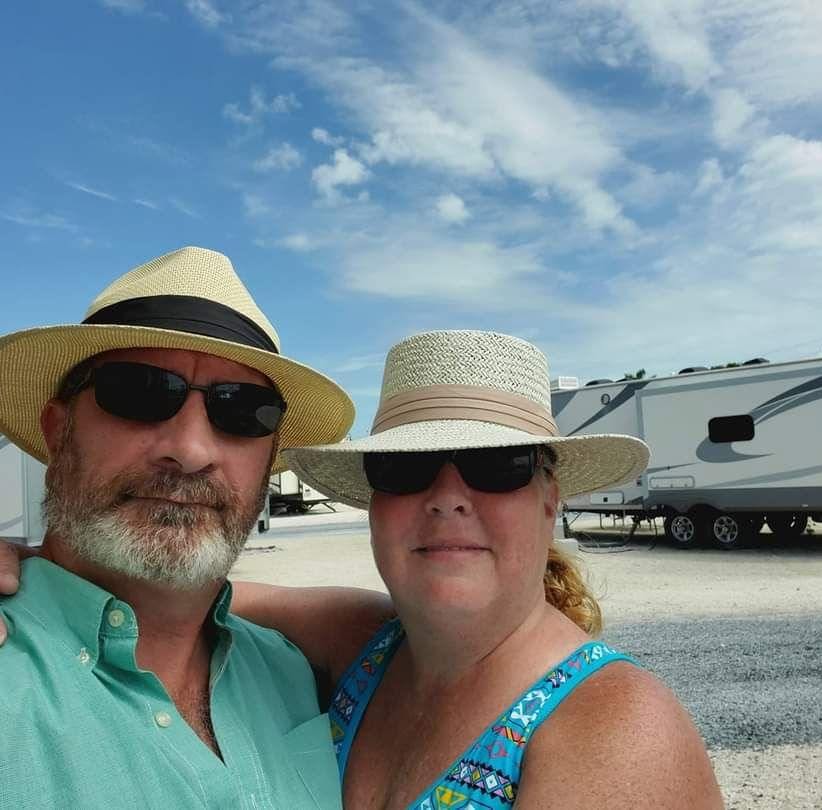
We’re Joe and Jana Martin. After four years of full-time RV travel, including eight months in the Florida Keys, we’re preparing for another chapter. Our planning approach leaves room for ordinary needs: laundry, groceries, work, pets, and a quiet evening after a driving day. Those details belong in the campground decision from the beginning.
Start with the purpose of this particular stop
Give each stay a job. An overnight travel stop mainly needs straightforward access, suitable parking, and a workable arrival time. A destination stay may need proximity to the places you want to explore. A working week may depend on a comfortable site and a verified connection plan. Treating all three as the same search can waste time and money.
Write down the non-negotiables before opening booking sites. Include dates or flexibility, vehicle dimensions, essential services, maximum total cost, and anything affecting the people or pets traveling with you. Then add preferences such as shade, a waterfront view, or a particular amenity. This separates a site that is unsuitable from one that simply lacks an extra you would enjoy.
Keep one accurate rig-information card
Record the dimensions and configuration the campground needs to assess your setup. Use actual manufacturer information and appropriate measurements, including height, length, slide-outs, and other relevant equipment. If you tow a trailer or bring another vehicle, record those details too. Ask how the campground defines its length limit; a listing may refer to the RV alone, a combined setup, or a particular parking space.
Keep the card accessible when you make calls. You should not need to remember a model’s approximate advertised length while someone asks about backing space. Update the information if your vehicle or equipment changes. When a campground cannot confirm a critical dimension, treat that as an unresolved question and seek clarification before relying on the booking.
Check the route into the campground
The entrance can matter as much as the site. Read the operator’s directions, note the correct gate, and check for route restrictions appropriate to your vehicle. Review the final approach as well as the highway portion. Passenger-car navigation may select a shortcut that is inconvenient or unsuitable for an RV.
Ask about steep approaches, narrow turns, gates, overhead obstructions, or construction when those details are unclear. A satellite image may help you understand the layout, but it cannot establish current clearances or road conditions. Save the campground’s recommended approach and use reliable current road information. If the operator warns against a particular route, put that note beside the address so you see it before driving.
Understand the site’s services in plain language
Read the actual site listing instead of assuming a campground-wide amenities icon applies everywhere. Confirm the electrical service appropriate to your RV, whether potable water is at the site or elsewhere, and whether sewer service is available at that site. Ask where any shared dump or water facilities are and when they can be used.
Match your equipment and operating procedures to your manufacturer’s instructions. A reservation description is not an electrical or plumbing installation guide. If you are uncertain about a connection, ask the campground and an appropriately qualified RV professional. Also confirm practical details such as laundry access, restroom availability, and seasonal shutdowns when those services affect your decision.
Compare the kinds of campgrounds available
Public campgrounds, private RV parks, destination resorts, and other permitted overnight arrangements can serve different trips. Look at the services and rules of the specific location rather than assuming every public campground is basic or every private park is crowded. There are exceptions in every category.
Think about what you will use during this stay. A pool may be valuable on a family vacation and irrelevant during a one-night stop. A remote setting may suit an unplugged weekend but complicate a week of work calls and errands. Dispersed camping introduces separate permission, access, resource, and waste-planning questions. Treat it as its own camping style, not as an interchangeable substitute for any campground reservation.
Inspect the individual campsite details
Compare the map, available photographs, stated parking limits, surface description, and any notes for the exact site. Look at where the door side of the RV would face, the space around slides, proximity to roads or facilities, and where an additional vehicle would park. A pull-through description does not remove the need to check the approach and exit.
The National Park Service reminds RV travelers that sites and size restrictions vary by park. Use that same site-specific habit elsewhere. If a photograph suggests an issue the listing does not explain, ask a concrete question: whether the space accommodates your configuration, whether a branch has been removed, or whether the stated surface changes after rain. Save the answer with the reservation.
Build a driving day around the arrival
Start with the campground’s arrival window and work backward. Include the time needed to leave the previous site, travel, stop for fuel and food, and manage ordinary delays. Your mapping app’s estimated drive is only one part of the day.
Keep the plan flexible enough to protect a calm arrival. A long day can become harder when you also need groceries, a water fill, or unfamiliar setup procedures. Where practical, arrange those tasks so they do not all fall into the last hour. If the realistic schedule leaves you arriving after the office closes, solve the late-arrival question before booking rather than hoping the gate will still be open.
Research the season, not just the scenery
Check the campground’s operating dates and the conditions relevant to your dates. Roads, facilities, water service, and local attractions may operate on different schedules. A beautiful shoulder-season photograph cannot tell you which services will be available during your stay.
Review current destination alerts, weather information, and local restrictions before departure. The NPS trip-planning guide recommends checking conditions and having alternatives when conditions or personal readiness change. Apply that principle to your campground plan: know what would make you delay, reroute, or choose a different stay. At the coast, in mountains, or in areas affected by extreme weather, the timing decision can be as important as the site selection.
Learn the booking rules for that location
Reservation windows, release times, maximum stays, minimum nights, and modification policies vary. Read the current instructions for the campground or reservation platform. Do not assume a rule from last season, another park, or an online discussion still applies.
For a high-demand stay, prepare the information you need before the opening time: your dates, suitable site choices, equipment details, and any required account access. Include alternatives you would actually accept. A reservation is useful only if the site fits and the terms work for you. Avoid taking an unsuitable site simply because the booking process feels competitive.
Compare the total stay cost
Record the nightly amount, taxes, booking charges, additional vehicle or occupancy fees, utility charges where applicable, and other mandatory costs. Ask which fees are refundable and what happens if you shorten the stay. Optional extras should be identified separately so you can choose whether they matter.
For illustration, four nights at $42 plus a $12 booking fee total $180 before other charges. Four nights at $46 with no booking fee total $184. The headline nightly prices suggest a bigger difference than the complete totals. These figures are examples, not current campground rates. Add the actual costs for your dates, and compare the services and location you would receive for the difference.
Evaluate memberships against real future stays
A membership is useful when its rules and participating locations match trips you are likely to take. Read eligibility, reservation limits, blackout dates, stay restrictions, cancellation terms, renewal conditions, and any fees beyond the advertised membership price. Check the actual parks you would use rather than relying only on the size of a network.
Use a simple break-even exercise. If a hypothetical membership costs $100 and would save $10 on each eligible night you already intend to book, ten eligible nights would recover that fee before other differences. If those nights require detours or bookings you would not otherwise make, include that effect. A discount can reduce a suitable stay’s cost; it cannot make an unsuitable itinerary worthwhile by itself.
Ask different questions for a monthly stay
An extended stay needs information beyond a nightly vacation booking. Ask about availability for your full dates, the site assignment process, deposit and cancellation terms, utility billing, mail or package policies, additional charges, and any rules affecting the length or nature of your stay. Read the written agreement that applies.
Then consider ordinary life around the park. Where are groceries, laundry, services, and the places you expect to visit? How will you get around after setting up? If you work, what connection arrangements can you verify? A monthly price may look attractive until the daily practicalities are included. Check current policies directly with the operator; another traveler’s arrangement may have been temporary or specific to their booking.
Make a realistic first-come, first-served plan
Before relying on an unreserved campground, confirm how registration and site availability work. Find out the expected arrival process, payment arrangements, site restrictions, and what to do when the campground is full. A general label does not tell you whether suitable RV sites will be available at the time you arrive.
Identify at least one legitimate fallback with an approach and operating schedule that work for your vehicle. Keep enough travel margin to reach it without making the day unmanageable. Flexibility works best when you understand your alternatives. It becomes stressful when the backup consists only of driving farther and hoping the next entrance has a vacancy sign.
Read reviews for patterns that affect your stay
Look for recent observations about the site or part of the campground you would use. A review from a tent camper, a different season, or a much smaller RV may describe a good experience without answering your questions. Read the details behind a rating and decide which conditions matter to your household.
Repeated comments about road noise, difficult access, changing utility reliability, or unclear arrival instructions deserve a current check with the operator. One frustrated review may reflect an unusual incident; several consistent descriptions may point to a recurring issue. Use reviews to identify questions rather than treating them as a guarantee of what your visit will be like.
Verify connectivity if work depends on it
A Wi-Fi symbol is not enough information for a working stay. Ask what service is provided, where it is usable, whether limits apply, and whether any coverage information is specific to the site you are considering. Consider your own cellular or other connection options and their current service terms.
Build a work backup you can actually use. That might mean scheduling important calls outside travel days, identifying a suitable local workspace, or having a second connection arrangement appropriate to the location. Avoid promising uninterrupted work solely on the basis of an old speed test. Conditions, equipment, congestion, and the exact campsite can all change the experience.
Include pets and access needs in the reservation
Read current pet rules before paying. Check restrictions, numbers of animals, leash requirements, unattended-pet policies, and any areas where animals are not permitted. Ask about details relevant to your animals rather than assuming that “pet friendly” answers every question.
For personal access needs, ask about the exact route from parking to the facilities you will use, the surface, distance, slopes, steps, and available assistance. An accessibility label can be a useful starting point, but your needs are specific. Share the practical information necessary for the operator to answer, and request clarification where a description is too broad to support a decision.
Prepare a one-page reservation record
Put the campground name, exact entrance address, site number or assignment instructions, reservation number, arrival and departure times, office contact, and cancellation deadline in one place. Add the agreed equipment details and any important answers you received before booking.
Keep a copy available offline. Include a map or written directions when service may be limited. If you have several consecutive bookings, use the same format for each so you can find the next detail quickly. Give the record a final check before departure: a confirmation email proves that a booking exists, but it does not prove that every assumption you made about the stay was correct.
Use a deliberate arrival routine
On arrival, follow check-in instructions and confirm the site assignment before settling in. Inspect the space and approach for fit, surface conditions, service locations, and clearances relevant to your vehicle. If something is wrong, ask for guidance before committing to a setup that will be difficult to undo.
Park and set up using the procedures for your rig. Keep communication between driver and guide simple and stop when either person is unsure. Once the essentials are complete, locate the facilities and review the rules you will need during the stay. Save exploring the whole park for a moment when the household is settled and the arrival tasks are finished.
Solve late arrival before it happens
Ask whether late arrivals are permitted, how to obtain a site assignment, whether gates or access codes are involved, and which services will be available after the office closes. Write the instructions down. If the operator cannot accommodate your expected arrival, adjust the route or choose another stay.
If your schedule changes on the road, contact the campground through an appropriate channel before the office closes when possible. Follow the agreed procedure rather than relying on another traveler’s advice at the entrance. A late arrival also calls for consideration toward nearby campers. Keep unnecessary activity and noise to a minimum while completing essential tasks safely.
Decide how you will handle a change of plan
Record the cancellation and modification deadlines when you book, not when the weather forecast becomes concerning. Know whether shortening a stay, moving dates, or failing to arrive changes the charges. If an urgent situation develops, ask the provider what options are available and keep a record of the response.
Avoid building an itinerary in which every night depends on an exact arrival after a demanding travel day. Some travelers prefer a few longer destination reservations with flexible transitions. Others need a more fixed schedule because of work or events. Choose an arrangement that reflects your constraints and review where a single delay would create several downstream problems.
Learn from the stay without overcomplicating the next search
Keep a short site note after departure. Record the site number, dates, your rig configuration, what worked, what was difficult, and whether you would return for the same purpose. Include the facts you had to verify after arrival so you remember to ask about them next time.
A destination campground that was excellent for sightseeing might not be your choice for a working month. Record that distinction rather than giving every stay a single permanent label. Over time, your own notes become a practical planning tool built around your priorities. Keep the record factual and date-specific, especially if you later turn it into a public review.
Work through one reservation from idea to decision
Imagine that you want a three-night stay near a coastal town. You will arrive after a driving day, need a place to work on one morning, and plan two outings. Begin with those requirements rather than sorting every listing by its star rating. Your essential filters might be an appropriate site, a feasible arrival time, and a connection backup. A beachfront location can remain a preference until those requirements are satisfied.
Shortlist three plausible campgrounds and make the same inquiries for each. Ask for the total price on your dates, the actual site or assignment process, the best entrance for your approach, and the current policy for your pets. Check the distance to your planned outings and where you would get groceries. Record unanswered questions instead of quietly treating them as favorable answers.
Now compare the tradeoffs. One campground may be closer to town but place you near a busy road. Another may offer a quieter site with a longer drive to each outing. A third may be attractive but unable to confirm the access your rig needs. The third option requires clarification before it belongs in the final comparison. Between the others, decide which inconvenience you would rather accept during this particular stay.
Finish by checking the cancellation deadline and how the booking fits the previous and following nights. Save the final record and stop researching unless a meaningful condition changes. A defined process helps you make a decision without spending every evening revisiting the same dozen photographs.
Use questions that produce useful answers
Replace broad questions with details the operator can assess. Instead of asking whether a park is quiet, ask which areas are closest to the road, event space, or other likely noise sources. Instead of asking whether the internet is good, explain the kind of connection you need and ask what information is available for the site you are considering.
Likewise, describe the actual vehicle configuration when asking about fit. Ask which part of the approach or parking area determines the stated limit. If you need to store an extra vehicle, find out where it would go and whether there is an additional charge. Clear questions do not guarantee a perfect stay, but they make it easier to identify a mismatch before arrival.
Campground planning questions
Should we book every night of an RV trip in advance?
That depends on your dates, flexibility, destination demand, and tolerance for uncertain arrivals. Reserve the stops that matter most, then assess the gaps individually. A flexible trip still needs legal, suitable alternatives and enough time to reach them. A fixed itinerary needs a plan for changes and an understanding of cancellation costs.
Can we trust a campground’s overall length limit?
Use it to narrow the search, then confirm the individual site and approach for your setup. Ask how the stated measurement is defined and where additional vehicles may park. If the information is unclear or contradictory, resolve it with the operator before paying rather than assuming a small difference will be overlooked.
What is the most useful thing to save before travel?
Save the complete arrival record, including the correct entrance, contact number, site or assignment process, and after-hours instructions. Keep it available offline. Add any route warning or special arrangement you discussed, because those details are the easiest to forget when several reservations look similar in your inbox.
Planning resources to check directly
- National Park Service campground information
- NPS trip-planning guide
- Recreation.gov reservation questions
- The campground operator’s current site descriptions, rules, and reservation terms.