Finding monthly RV parks starts with how you will live there
Finding monthly RV parks means looking for a place that supports an ordinary month, including work, errands, rest, utility use, and the practical needs of your RV. A campground that makes a wonderful weekend stop may not be the right base for several weeks. Before comparing attractive photographs or the lowest advertised rate, decide what a workable longer stay must include.
This article contains paid Amazon links. As an Amazon Associate I earn from qualifying purchases. The links open Amazon product searches to help you compare options; check current specifications, dimensions, and seller details before buying.
In this guide
- Finding monthly RV parks starts with how you will live there
- Write a one-page brief before searching
- Search by a practical radius rather than one town name
- Look for an extended-stay process, not only a nightly calendar
- Make the first inquiry easy to answer
- Confirm the exact site and the surrounding space
- Separate rent from the complete cost
- Compare two quotes on the same basis
- Check utilities as individual services
- Verify connectivity for the work you actually do
- Read the household rules before committing
- Understand changes, departure, and extension requests
- Evaluate the neighborhood for an ordinary week
- Plan storage and supplies for a longer stay
- Keep a realistic backup while waiting for confirmation
- Prepare an arrival folder and a first-week plan
- Use a comparison worksheet that shows what remains uncertain
- Questions to settle before paying
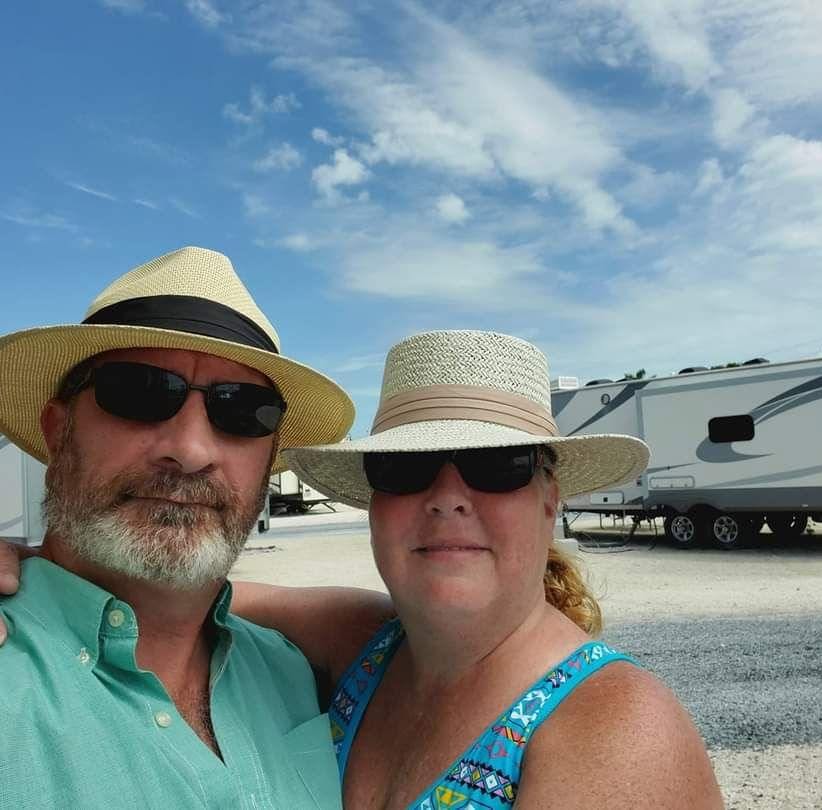
After four years of full-time RV travel, including eight months in the Florida Keys, we appreciate the difference between visiting an area and making it a temporary home base. This guide gives you a repeatable search and comparison process. It does not rank parks we have not inspected or promise that any particular campground will have space for your dates.
Write a one-page brief before searching
Begin with your arrival and departure dates, the number of people traveling, pets, and the exact RV you intend to bring. Record its relevant dimensions and service requirements using the vehicle documentation and reliable measurements. Include slides, vehicles, parking needs, and any access considerations that affect which sites you can use.
Next, list the reasons for staying a month. Are you working nearby, exploring slowly, visiting family, or reducing the strain of frequent moves? Those reasons determine the search area. A campground beside a scenic lake may be a poor choice if getting to work requires a tiring drive twice a day. A simpler park near the places you use could serve you better.
Divide the brief into necessities and preferences. Reliable connectivity for paid work may be essential; a swimming pool may be optional. A usable walking route might matter more than organized activities. Limit the essential list to things that would truly make the stay unworkable if missing. That gives you room to compare different kinds of parks without abandoning important needs.
Search by a practical radius rather than one town name
Put your main destination on a map and identify nearby communities that could reasonably serve as a base. Search those communities individually using terms such as monthly RV sites, extended-stay RV camping, seasonal RV sites, and long-term campground stays. The terms can overlap, but they do not necessarily describe identical arrangements.
Read the actual campground website after finding a directory listing. A directory may help you discover a park while leaving its current availability, rules, and prices unclear. Note the operator's contact information and the date you checked. Treat an old review or search snippet as a lead rather than a current offer.
Consider the drive you would actually make. A short distance on a map can involve a slow road, difficult turns, tolls, or congestion. Evaluate campground access for the RV separately from ordinary local errands. Ask the operator about the recommended approach and any access restrictions, then verify the route using information appropriate to your vehicle.
Use a simple search notebook if you prefer paper. An undated travel notebook on Amazon (paid link) can hold one page per candidate, but an existing notebook or spreadsheet works just as well. Record unanswered questions clearly so a promising listing does not gradually become a confirmed fact in your memory.
Look for an extended-stay process, not only a nightly calendar
An online reservation calendar often focuses on short visits. If it does not offer a month, look for an extended-stay page or ask the campground directly whether it handles longer visits separately. Some operators ask for an inquiry before giving a quote or assigning a site. An unavailable nightly search does not establish whether a monthly arrangement is possible.
KOA's extended-stay information is one starting point for discovering participating locations. Use it as a directory of possibilities, then contact the individual campground for its actual terms. Independent parks and other campground operators may also have suitable arrangements. Comparing several operators helps you avoid assuming that one organization's booking method is universal.
Clarify what the park means by monthly. Ask for the precise start date, end date, billing period, minimum commitment, and latest departure time. Determine whether the quoted rate applies to your entire stay and whether changing the dates changes the price. A calendar month, a fixed number of nights, and a date-to-date billing cycle can lead to different comparisons.
Make the first inquiry easy to answer
Send or say the information the operator needs to assess the request: dates, RV type and dimensions, party size, pets, vehicles, and required services. Explain any important access or work needs briefly. Ask whether the park has a suitable monthly site rather than asking only whether it has any space.
You might write: We are looking for a monthly RV site from our proposed arrival date to our proposed departure date. Our RV and vehicles have the following dimensions and service needs. Can you confirm availability, site suitability, the complete estimated cost, and the written extended-stay terms? Add your real details before sending the inquiry.
Keep the first conversation focused. You can ask detailed follow-up questions after the operator confirms that your dates and setup are plausible. Record the person's name, the date, and the next action. If availability is uncertain, ask whether there is a waitlist, how it works, and whether any fee or commitment is involved before joining it.
Confirm the exact site and the surrounding space
A park accepting your RV category does not prove that every monthly site fits your particular setup. Ask whether a site number or only a site type is being offered. Request dimensions, parking arrangements, surface information, and details about slides or other clearances relevant to your RV. Clarify whether a later assignment could change those conditions.
Check where vehicles can be parked and whether extra parking costs money. Ask about the route from the entrance to the site and the maneuver needed to occupy it. A generous pad can still have a difficult approach. If photographs are available, make sure they depict the proposed area rather than a premium overnight section elsewhere in the park.
For a month, orientation and nearby activity deserve attention. Ask about road traffic, maintenance areas, gathering spaces, and other features that could affect your daily routine. Shade can be welcome but may interact with your equipment or preferences. Describe the actual need and ask specific questions instead of expecting the operator to interpret quiet, private, or spacious exactly as you do.
Separate rent from the complete cost
Request an itemized quote for your dates and household. Ask what is included, what is charged separately, what is refundable, and when each payment is due. Useful categories include site rent, taxes where applicable, reservation or application charges, deposits, utilities, additional occupants, pets, extra vehicles, and optional services you intend to use.
Do not assume electricity is included in a monthly price because it was included in the nightly rate. Ask whether usage is metered, how charges are calculated, when readings are taken, and how the final bill is handled. If the operator offers a typical usage estimate, record it as an estimate with its assumptions rather than a spending guarantee for your household.
Compare fixed costs and uncertain costs separately. The fixed portion helps you assess the offer; the uncertain portion needs an allowance and follow-up questions. An expense tracker notebook on Amazon (paid link) can help organize actual charges during the stay. Buying a planner is optional; understanding the complete bill is the important part.
Compare two quotes on the same basis
Imagine Park A quotes a lower site rate but charges separately for electricity and additional parking. Park B quotes a higher site rate with different inclusions. You cannot decide which costs less by comparing the headline amounts. Build the same list of charges for each park and use the same proposed dates and household details.
Then add costs created by location. Consider local driving, laundry, transportation to work, and any services you would need because the campground lacks them. Avoid assigning imaginary precision to unknown expenses. Mark a cost as confirmed, estimated, or unresolved, and identify what would narrow the uncertainty.
Finally, compare value alongside cost. A modestly higher total may be worthwhile if it supports necessary work or reduces a difficult commute. A cheaper park may be perfectly suitable when its missing amenities do not matter to you. Choose according to your own month rather than the longest list of facilities or someone else's claim of the best bargain.
Check utilities as individual services
Ask exactly which services reach the proposed site. Confirm electricity appropriate to your RV, a suitable water supply, and the sewer arrangement. If a service is shared elsewhere, establish how you would use it throughout a month. Full hookups and partial hookups are useful starting labels, but the practical details still need confirmation.
Our campground hookup types explained guide provides questions for comparing the services. Use your RV and equipment instructions for actual compatibility and operation. Do not assume an adapter, longer hose, or improvised arrangement will resolve an unsuitable site. Ask a qualified professional when a technical question remains beyond your understanding.
Also ask how interruptions and maintenance are communicated. Find out whom to contact if a service stops working and whether that contact is available outside office hours. You are looking for a clear reporting process, not a promise that nothing will ever go wrong. Knowing the next step makes a disruption easier to handle.
Verify connectivity for the work you actually do
Free Wi-Fi is a description of an amenity, not evidence that it supports your particular job at the proposed site. Ask where coverage is intended to reach, whether there are usage limits or charges, and whether the monthly area uses the same system as the overnight section. Be specific about calls, uploads, or other tasks you need to perform.
If possible, test your own equipment at or near the offered site with the operator's permission. A speed result at the office may not represent the campsite. Note when you tested and what you could do, while recognizing that a brief test cannot guarantee performance throughout the stay. Have an alternative if losing connectivity would jeopardize essential work.
Think through that alternative before paying. It could involve another connection method compatible with your needs or a suitable local workspace. Research the actual access, hours, and cost of any place you intend to use. A vague plan to find a coffee shop later is less useful than knowing where you could realistically complete tomorrow's meeting.
Read the household rules before committing
Request the current rules for the extended-stay area and read them together if traveling as a couple or household. Check pets, visitors, parking, quiet hours, outdoor storage, deliveries, site appearance, and any limits on equipment or activities. Clarify a rule that affects your routine rather than assuming an exception will be available after arrival.
Ask about any RV eligibility requirements before submitting money or making travel plans. Provide accurate information about your actual vehicle and ask what documentation or review is needed. If photographs are requested, use the operator's verified contact process. Do not mistake an encouraging phone conversation for final acceptance when further approval is required.
Keep important documents organized. A portable document organizer on Amazon (paid link) may be useful for reservation terms and routine travel records. Store sensitive information securely and keep an accessible copy of essential arrival details. The campground's own instructions should determine which documents it needs to see.
Understand changes, departure, and extension requests
Before reserving, read the terms for cancellation, early departure, changing dates, deposits, and payment. Ask what happens if you need to leave before the end of a billing period. Record the written answer rather than assuming unused nights will be refunded according to a nightly reservation policy.
If you hope to stay longer, ask how extensions are requested, when the decision is made, and whether you would need to move sites. Do not build the rest of your travel schedule around an extension that has not been approved. A site available this month may already have another commitment next month.
Treat notice requirements as calendar tasks. Record the date by which you must request an extension, cancel, pay, or give departure notice under the actual agreement. An undated monthly planner on Amazon (paid link) can keep those dates visible. Your existing phone calendar is equally useful if it is the system you reliably check.
Evaluate the neighborhood for an ordinary week
Locate the grocery store, laundry option, fuel stop, and other services you expect to use. Check the practical journey from the campground rather than measuring only straight-line distance. If you need specific professional services or appointments, confirm their availability independently. A campground cannot establish that every outside service will meet your needs.
Consider how the park feels during the hours you will be there. Someone working nights may need different conditions from a traveler spending the day exploring. Ask about scheduled activities and nearby sources of noise. Recent reviews can suggest useful questions, but a single complaint or glowing account should not be treated as proof of your future experience.
If visiting in advance is practical, request a permitted look at the monthly area. Notice pedestrian routes, lighting, the path to facilities, and whether the site arrangement suits your routine. Respect occupied sites and resident privacy. The aim is to understand the setting, not to inspect other campers or collect personal information about them.
Plan storage and supplies for a longer stay
Avoid buying a month of extra gear before you know the available space and park rules. Start with what you own and identify the specific inconvenience you need to solve. Laundry, grocery storage, and managing everyday clutter often deserve more attention than decorative extras that make packing and travel harder later.
For instance, a collapsible laundry basket on Amazon (paid link) may help if its dimensions fit your storage and the facility you use. Compare it with a bag or basket already on hand. A longer stay does not turn limited RV storage into unlimited capacity, and every item still travels with you afterward.
Keep a departure mindset while settling in. Put away items in a way you can reverse without a major project. Follow site rules for outdoor belongings, and maintain access to equipment and exits. Enjoy making the site comfortable while preserving the ability to pack and leave according to your RV's normal preparation process.
Keep a realistic backup while waiting for confirmation
A monthly inquiry is not a reservation until the operator confirms the arrangement under its own process. Keep another plausible option while questions remain open. Note how long any quote or tentative hold lasts and what action would commit you. Avoid paying multiple deposits without understanding the terms and the actual need for those commitments.
If no suitable month is available, reconsider one variable at a time. Could you adjust dates, expand the search radius, or split the stay? Compare the added moving effort and total cost before deciding. A sequence of short stays can work, but it deserves its own reservations and travel plan rather than being treated as a guaranteed fallback.
Public campgrounds are not automatically substitutes for a monthly private-park arrangement. Check each facility's permitted stay length and current rules. Recreation.gov explains that location-specific policies take precedence over its general policies. Verify your intended stay with the actual facility instead of assuming that available calendar dates authorize continuous occupancy.
Prepare an arrival folder and a first-week plan
Save the confirmed dates, address, site information, payment records, current rules, and arrival instructions where you can access them without relying on campground internet. Ask about office hours, late arrival, the approved approach, and whom to contact if delayed. Our RV campground booking guide offers a broader reservation checklist.
During the first week, verify that billing details and site services match what was agreed. Raise discrepancies promptly and calmly with the appropriate contact. Keep records of payments and important communications. A small misunderstanding is easier to resolve while the original documents and conversation are still easy to locate.
Give yourself time to learn the routine before filling the calendar. Find the facilities, establish ordinary errands, and notice how the space works for both travelers. A monthly base is valuable partly because every day does not need a new destination. Leave room to enjoy the place you took the trouble to choose.
Use a comparison worksheet that shows what remains uncertain
Give each candidate the same headings: dates, location, site, services, household rules, fixed charges, variable charges, payment deadlines, and unresolved questions. Add a source beside each answer. A written quote, a current rule sheet, and a dated phone note provide different kinds of evidence. Keeping that distinction visible helps you know which detail still needs confirmation.
For each unresolved question, identify the consequence. Uncertain laundry hours might be a minor inconvenience if another facility is nearby. Uncertain site dimensions could prevent you from using the reservation at all. Resolve the questions that affect suitability before spending time comparing optional amenities. This keeps the search from becoming a collection of attractive places that cannot actually accommodate your stay.
Review the worksheet with everyone sharing the RV. Each person should name one thing that would make an ordinary week comfortable and one thing that could make the stay difficult. Differences are useful information. One traveler may prioritize quiet mornings while the other needs an easy commute. Discuss those needs before choosing, then write down the compromise you are accepting.
Keep the final worksheet after arrival. Add the actual total and a few factual notes about your own stay, including the dates and site. Those records can help you evaluate a return visit without assuming that future prices, management, or conditions will remain identical.
Questions to settle before paying
- Is this exact stay available and approved for our RV, household, pets, and vehicles?
- Which site or site category is included, and what could change before arrival?
- What is the itemized estimated total, including utilities and required charges?
- Which payments are refundable, and what deadlines or notice requirements apply?
- What services reach the site, and how do we report a problem?
- Can our work and ordinary routines function here with a workable backup?
- What must we do to arrive, extend the stay, and leave under the written terms?
Keep unresolved answers visible. Finding monthly RV parks becomes much easier when you can distinguish a beautiful possibility from a suitable, confirmed arrangement. Choose the park whose location, services, total cost, and rules support your everyday life, then keep the paperwork and planning simple enough to enjoy the month.
For practical RV tips and updates, join The Open Road Letter.