RV campground booking starts before you choose the dates
RV campground booking is the process of matching a particular site, service arrangement, arrival plan, and set of terms to your actual RV and household. Clicking an available date is only one part of it. A reservation can be confirmed while important questions about access, parking, utilities, or arrival remain unanswered.
This article contains paid Amazon links. As an Amazon Associate I earn from qualifying purchases. The links open Amazon product searches to help you compare options; check current specifications, dimensions, and seller details before buying.
In this guide
- RV campground booking starts before you choose the dates
- Prepare the information the campground needs
- Find the official booking path
- Check the facility’s actual booking window
- Open the individual site information
- Assess the approach and outdoor space
- Verify each utility instead of trusting one label
- Evaluate internet claims against your actual needs
- Compare the complete cost of the stay
- Read cancellation and change terms before committing
- Ask about arrival and late check-in
- Review the confirmation immediately
- Recheck the stay before departure
- Assess the assigned site before setting up
- Use a final booking decision sheet
- Work through a booking comparison before choosing
- Frequently asked questions
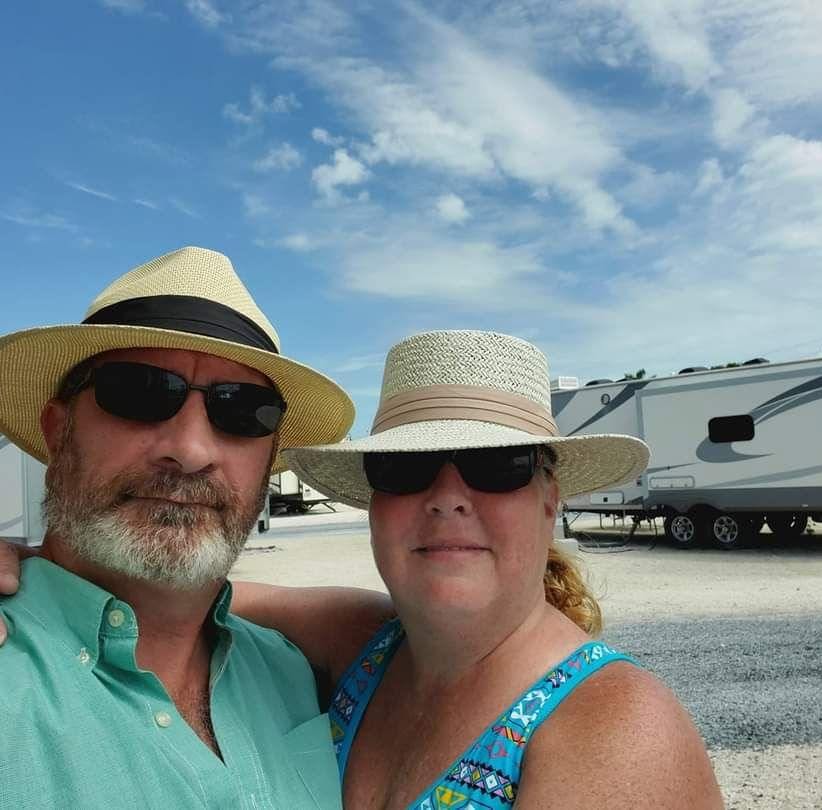
We’re Joe and Jana Martin. Four years of full-time RV travel, including eight months in the Florida Keys, shaped our preference for practical details over broad promises. This guide is a booking workflow, not a claim that we have stayed at every campground you may find or that any reservation system guarantees a suitable site without your review.
Use the process below before committing money or arranging a tightly connected route. The goal is a reservation you can explain: what you booked, why it fits, what it costs, how you will arrive, and what happens if plans change. That clarity makes the actual stay much easier to enjoy.
Prepare the information the campground needs
Record the actual RV type, relevant dimensions, travel configuration, and any additional vehicle. For combinations, keep the individual vehicle information and the overall arrangement distinct. Ask how a booking field defines length if that is unclear. A model number is not a substitute for the measurement requested.
List the services and site features that matter to your stay. These may include a particular electrical service, appropriate water arrangements, sewer access, a usable parking surface, room for slides, or proximity to facilities. Distinguish essential requirements from preferences so an attractive optional feature does not obscure a practical mismatch.
Include household details that affect the booking: the number of people, pets, extra vehicles, planned length of stay, and any specific access needs. Review the actual rules instead of assuming these are handled identically at every campground. Accurate information helps staff answer a meaningful question about your stay.
Keep the information in an accessible record. A travel notebook on Amazon (paid link) or your existing notes can work. The useful part is having the same current details available to everyone researching and booking, rather than relying on different estimates in separate conversations.
Find the official booking path
Start with the campground or managing organization’s own information and follow its stated reservation process. A search result, map listing, or old blog post may help you discover a place, but it should not be your only basis for identifying where and how to book.
Check that the listing describes the actual campground, dates, and accommodation type you want. Similar names, nearby facilities, different loops, and lodging options can make the wrong result look plausible. Read the location and site details before entering payment information or assuming a quoted price applies to your RV stay.
If a third-party platform is part of the official process, review its role and the relevant terms. Keep track of who takes the reservation, who manages the facility, and whom to contact about a site question or booking change. Those responsibilities may not all belong to the same office.
Avoid treating a familiar logo as confirmation of every detail. The important evidence is the actual offer and facility information. When the booking route is unclear, contact the campground using verified contact information from its official source before committing.
Check the facility’s actual booking window
Find the reservation-release information for your specific facility and dates. Some places open dates on a rolling basis, while others use different release arrangements. Do not assume a broad rule from another park or an earlier trip applies to this booking.
Recreation.gov’s booking FAQs explain that facilities set their own booking windows. Use the information provided for the actual location and check the relevant time zone where a release time is stated. Prepare the account and information you need before a busy booking period.
Read any minimum stay, maximum stay, arrival-day, occupancy, or other rules that affect your proposed dates. An apparently available site may not support the stay as you have imagined it. Do not build adjacent reservations around an assumption you have not checked.
Have a small shortlist ready if appropriate sites are limited. Rank alternatives by confirmed suitability, not merely by how close they are to the first choice on a map. A flexible date or nearby base may be more useful than accepting an unsuitable site during a hurried booking session.
Open the individual site information
A campground-wide description does not establish what is available at every site. Open the actual site listing and review permitted equipment, dimensions, services, surface, access notes, and any alerts. Check the relationship between the site and the rest of the facility where it matters to your stay.
Look for distinctions between RV and trailer limits. The National Park Service’s Yosemite reservation guidance specifically advises checking the campsite description for trailer length rather than relying only on search results. Use the actual equipment category and site information in your own booking.
Check whether the additional vehicle can park as intended. A pad that accommodates the RV may not provide permitted space for a truck, towed car, or visitor vehicle. Ask about the real arrangement rather than assuming an empty-looking patch beside the site is usable parking.
Save the important details with the site number and review date. If a question remains, mark it unresolved and ask before paying. A specific question about a particular site is easier for staff to answer than whether the entire campground is generally suitable for RVs.
Assess the approach and outdoor space
Consider the entrance, internal roads, turns, grades, overhead obstacles, and the maneuver needed to reach the pad. A generous pad length does not prove the approach works. Ask for RV arrival instructions that apply to your actual arrangement and save them offline.
Look at room for slides, awnings where appropriate and permitted, utility access, and ordinary outdoor use. Photographs may help identify questions, but they can omit obstacles or show a different condition. Confirm important details instead of interpreting every open area as available space.
If you need access to a bathroom, laundry, office, or other facility, investigate the actual distance and route. A map can show proximity without describing the walking surface, grade, lighting, or seasonal availability. Describe the need clearly and obtain the relevant information from staff.
Use a compact measuring tape on Amazon (paid link) if a suitable tool helps establish your own equipment dimensions. The campground cannot assess an accurate fit question if the vehicle information is only a guess. Measurements support the conversation; they do not guarantee every maneuver or site condition.
Verify each utility instead of trusting one label
Ask whether water, electricity, and sewer are at the individual site, shared elsewhere, or unavailable. Confirm the specific electrical service and the relevant connection arrangement for your RV. Terms such as full, partial, premium, or serviced should lead to details rather than assumptions.
Ask where connections are located relative to the pad. Your equipment needs to fit the actual arrangement and manufacturer requirements. Do not plan on stretching, modifying, or improvising equipment to make an uncertain site work. Resolve compatibility and reach questions before the travel day where possible.
Check whether services change by season or during maintenance. A general amenity list may describe what exists, not what is available on your dates. The same applies to dump stations, potable-water filling, showers, laundry, and other facilities that support a stay without every individual hookup.
Record the answers alongside the site number. Our Campground Planning guide covers the wider arrival process. Use equipment-specific instruction for the actual connection work and obtain qualified help when something is unclear or appears unsuitable.
Evaluate internet claims against your actual needs
A campground advertising Wi-Fi does not establish the speed, coverage, reliability, or conditions you need for work. Ask what the service description means, where it is available, and whether restrictions apply. Treat a general amenity claim as a starting point for research.
If work is essential, confirm employer or client requirements for location, connectivity, and information security. Investigate suitable backup arrangements before choosing a site whose internet has not been established for your use. A nearby café should not automatically be treated as an acceptable workspace or a secure connection.
Use reviews to identify questions, not guarantee current performance. A report from a different site, season, device, carrier, or usage pattern may not predict your result. Separate the reviewer’s actual experience from your own still-unverified needs.
Keep work commitments and uncertainty visible on the itinerary. If the connection cannot be verified adequately, change the work plan, choose another arrangement, or reduce the dependency. A confirmed campsite does not confirm every service required to meet a deadline.
Compare the complete cost of the stay
Request or review the total for the actual dates, site, people, pets, vehicles, and applicable services. Distinguish the nightly amount from reservation charges, taxes, deposits, utilities, or other relevant costs. Do not assume every campground charges every category; have the actual offer identify what applies.
Check how discounts work for the booking in front of you. Eligibility, the part of the charge affected, and any required documentation should come from the current terms. A general discount description should not be used to invent a lower total than the checkout or campground confirms.
Use an undated expense planner on Amazon (paid link) if paper helps compare options. A spreadsheet or notebook is fine too. Include local travel and ordinary service needs when comparing a more remote site with one nearer the activities and facilities you intend to use.
Keep estimates labeled. A price discovered during early research may change before booking, and a quoted total may depend on the dates or details provided. Save the actual confirmation and payment information appropriately so the household knows what was committed and what remains payable.
Read cancellation and change terms before committing
Find the rules for changing dates or sites, shortening or extending a stay, cancelling, arriving late, and leaving early. Read the location-specific information rather than assuming every platform-wide policy applies without exceptions. Recreation.gov’s reservation policies direct users to facility details where local procedures differ.
Note deadlines in an understandable form, including time zone where relevant. If a deadline affects whether you can alter the wider itinerary, put it on the planning calendar. A term that matters only after something changes is still worth understanding before you pay.
Think about the chain of commitments. If one delayed travel day affects three later reservations, determine how much flexibility the route actually has. It may be worth choosing a simpler sequence or fewer fixed stops rather than making the whole trip depend on perfect timing.
Do not book an unsuitable site on the assumption that you can change it at arrival. Staff may have no appropriate alternative. Resolve essential fit questions in advance and accept the actual terms consciously instead of treating a confirmation as permission to improvise the rest.
Ask about arrival and late check-in
Confirm the normal arrival period, the check-in location, directions, gate or access arrangements, and whom to contact if delayed. Ask what information you need before the office closes. Keep any private access information secure and available to the travelers who need it.
Clarify whether a late-arrival process exists and what it requires. Do not assume a reservation means you can enter at any hour or that someone will remain available to help park. Plan a travel day that fits the actual arrangements and your current preparation.
Save instructions offline with the campground contact details. A weak signal at the entrance is an inconvenient time to search several emails for the site number or discover that the office sent an important message to an old address.
A covered clipboard on Amazon (paid link) can keep the current arrival checklist and non-sensitive directions easy to find. An ordinary folder works too. The holder supports organization; it does not replace reading the instructions or following the procedure for your actual equipment.
Review the confirmation immediately
Check dates, site number or assignment method, equipment details, occupants, services, total cost, and any important restrictions. Compare the confirmation with what you intended to book. Correct an error through the appropriate process promptly rather than hoping it will be easy to resolve after a long drive.
Record the contact route for different questions. A booking platform may handle a transaction, while the campground answers approach or facility questions. Knowing whom to contact can save time when an issue arises and prevent an incomplete answer from being treated as final.
Keep the original confirmation and any later written changes together. If several versions exist, identify the current one clearly. Avoid having one traveler use an old site number while another has the revised arrival instructions.
An expanding document organizer on Amazon (paid link) may help group records by stay. Store private payment and identity information securely. The everyday arrival page should contain what you need without exposing unnecessary personal details at the campsite.
Recheck the stay before departure
Review facility alerts, current road information, seasonal services, and any messages associated with the reservation. A suitable booking made months earlier may need a changed approach or a different plan after new conditions arise. Use current authoritative information for travel decisions.
Confirm that the RV and household details still match the booking. A different vehicle, extra person, additional pet, or changed arrival time may require attention. Contact the appropriate party rather than assuming the original reservation automatically covers the new arrangement.
Check the next stay as part of the departure review. Know the destination, appropriate route, arrival window, and first contact if delayed. This reduces the temptation to continue an unsuitable day simply because you have not organized the alternative.
If plans change, communicate early and follow the applicable process. Keep records of confirmed changes. Communication can clarify options, but it does not itself promise a refund, a new site, or an exception to the terms you accepted.
Assess the assigned site before setting up
At arrival, verify that the assigned site is the one you booked or an explicitly confirmed alternative. Check the approach, parking arrangement, services, and obvious concerns before attempting an uncertain maneuver. Ask staff about discrepancies while the vehicle is still appropriately positioned to reassess.
Do not let a confirmation persuade you to use damaged, unfamiliar, or apparently unsuitable equipment. Follow your actual RV and equipment instructions, stop when something is unclear, and obtain appropriate help. A reservation establishes a booking; it does not certify every physical condition on the day.
If the site does not work, explain the specific issue and ask about appropriate alternatives. Keep the conversation factual: the actual vehicle, the listing or confirmation, and what you observed. Avoid assuming staff can create space when the facility is full.
After settling in, record useful details for a future stay. Site-specific notes about access, services, parking, and your actual experience are more useful than a broad star rating alone. Keep observations separate from information you did not verify or features you did not use.
Use a final booking decision sheet
Before payment, write four short answers: why the site fits, what the complete stay costs, how arrival works, and which terms matter if the plan changes. If any essential answer is still a guess, resolve it before treating the reservation as ready.
For a couple sharing the planning, review the sheet together. One person may focus on access while another cares about facilities or work requirements. The reservation should support the household’s combined needs rather than the preferences of whoever happened to find the available date first.
Keep one realistic alternative where uncertainty remains in the wider route. That does not mean holding unnecessary duplicate reservations. It means knowing what you could appropriately do if weather, service, or travel conditions require a change, with the actual rules and availability considered.
Work through a booking comparison before choosing
Imagine two sites available for the same dates. The first is close to the main attraction but has an unclear truck-parking arrangement and a service description that does not identify the actual electrical supply. The second is farther away but has verified access, suitable services, and a clear arrival process. Neither is automatically the right answer. The first still needs information, and the second needs a realistic local-transportation plan.
For the first site, ask the campground specific questions and keep the answers with the listing. Do not award it a lower total cost until you know whether extra parking or another arrangement is required. For the second, estimate the actual journeys to the activities and ordinary services you expect to use. A longer local drive may be acceptable, but it belongs in the comparison.
Now review the terms for both. If one stay connects to a fixed event, a cancellation or change deadline may matter more than a small difference in the nightly amount. If the schedule is flexible, a different set of dates may provide a better suitable option. Use the trip’s actual priorities to decide which tradeoff is worthwhile.
The exercise shows why booking is more than choosing the prettiest photograph or lowest headline price. Each candidate needs the same completed questions. Once both offers are understood, you can make a clear choice without treating unknown details as benefits or expecting staff to solve them after arrival.
Frequently asked questions
Does an available site mean our RV will fit?
No. Read the individual site information and confirm the actual equipment type, dimensions, access, and parking arrangement. Availability concerns dates. Suitability concerns the vehicle and stay. Both need to be established before committing to the plan.
Are booking windows the same at every public campground?
No general window should be assumed for every facility. Use the actual location’s current release and reservation information. Prepare around the stated dates and time zone where applicable, and check for rules affecting the specific stay you want.
Can reviews replace a call to the campground?
Reviews can help identify useful questions, but they may describe another site or earlier conditions. Confirm essential current details through the facility and official booking information. Keep personal preferences separate from requirements that determine whether your actual arrangement works.
What should we do next?
Prepare the RV information sheet, shortlist suitable sites, and review the complete cost and terms before payment. Use Campground Planning for the wider process and Choosing the Right RV Length to understand why access involves more than the pad measurement.
For practical RV tips and updates, join The Open Road Letter.