RV trip planning starts with a workable day, not a full map
RV trip planning works best when the route, campground stays, driving demands, household needs, and backup options fit together. A map covered in attractive stops can still produce a tiring trip if every arrival depends on perfect traffic and every evening begins with a rushed setup. Start with the kind of days you want, then build the journey around them.
This article contains paid Amazon links. As an Amazon Associate I earn from qualifying purchases. The links open Amazon product searches to help you compare options; check current specifications, dimensions, and seller details before buying.
In this guide
- RV trip planning starts with a workable day, not a full map
- Decide what the trip is meant to give you
- Create a reliable vehicle information sheet
- Build the route around suitable overnight anchors
- Treat route guidance as something to verify
- Estimate travel time from the whole day
- Plan suitable stops before you need them
- Book the constraints and leave the rest with room to breathe
- Put household tasks on the itinerary
- Build a realistic service plan between stays
- Keep the trip budget connected to the itinerary
- Make a backup that can actually be used
- Run a departure review the day before moving
- Work through one practical planning example
- Keep one page for the next travel day
- Frequently asked questions
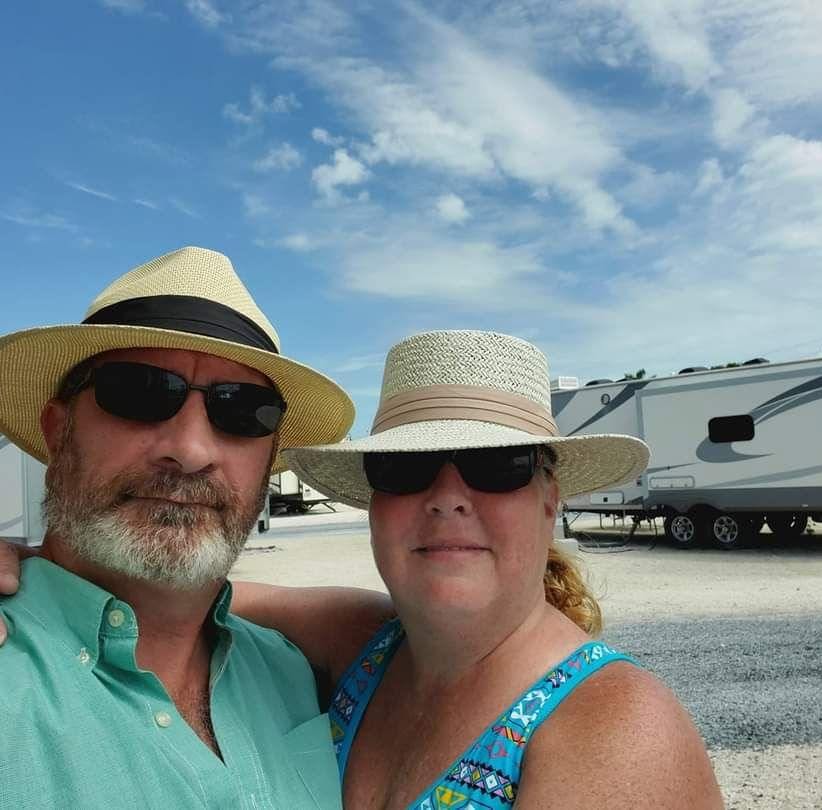
We’re Joe and Jana Martin, and we spent four years living and traveling full-time in an RV, including eight months in the Florida Keys. That experience is why we think about groceries, laundry, rest, and work alongside the scenery. This guide offers a planning process, not a claim that we have driven every route or reviewed every campground mentioned in your research.
You do not need to schedule every coffee break. You do need enough verified information to move comfortably, arrive with a practical plan, and change course when necessary. The most useful itinerary leaves room to enjoy the place you reached rather than treating the next departure as the main event.
Decide what the trip is meant to give you
Write a short trip brief before opening a route planner. Name the reason for going, the people and pets traveling, the available dates, and any fixed commitments. A family visit with a deadline, a slow coastal stay, and a sightseeing loop may involve the same region but need very different schedules.
Choose a few priorities. You might want one scenic destination, time together, a comfortable campsite, and enough work time to keep an existing commitment. If the priority list contains everything, it cannot help you make decisions when time or energy becomes limited. Decide what can be skipped without spoiling the trip.
Include the current household routine. Someone may need a quiet work block, regular meal times, a slower morning, or access to a particular service. Put those needs on the calendar before filling it with attractions. They are part of the trip, not interruptions that should somehow happen in the gaps.
Finally, describe a successful ordinary day in one paragraph. Perhaps it includes a manageable move, lunch at a suitable stop, a calm arrival, and an evening outdoors. Use that paragraph as a test when the route begins expanding. If the calendar no longer supports the day you wanted, simplify it.
Create a reliable vehicle information sheet
Record the actual dimensions, travel configuration, and relevant equipment information for your RV. For a combination, keep the individual vehicles and the complete arrangement distinct. Confirm how dimensions were established and update the sheet after changes that matter. A model name is not a substitute for the measurements needed in route and site questions.
Keep essential operating and support information accessible. This includes the relevant manuals, service contacts, assistance arrangements, and the equipment-specific arrival and departure procedures you have learned. Protect private records and maintain appropriate offline access rather than depending entirely on a live connection.
Use an expanding document organizer on Amazon (paid link) if paper records make retrieval easier. Separate reservations, route notes, vehicle information, and private documents. A folder does not verify the contents; it helps you find the information you have already checked.
Share the practical sheet with the person helping plan the trip. If one traveler knows the dimensions and another makes reservations, important details can get lost between conversations. A common record lets both people ask specific questions and recognize when a route or campsite needs clarification.
Build the route around suitable overnight anchors
Choose the main overnight areas before adding every attraction. Look for locations that fit your travel pace, vehicle, service needs, and intended activities. An overnight stop should be a workable place to arrive and stay, not merely a point at the right distance on the map.
Research the actual facility and site. Check permitted equipment, dimensions, approach, seasonal operation, services, and arrival instructions. A campground name or a general amenity symbol does not establish that a particular site will support your RV. Keep unresolved details visible until they are confirmed.
Read official destination information alongside booking listings. The National Park Service’s campsite-selection guidance notes that site arrangements and space needs vary. Use the current information for the place you intend to visit rather than applying a rule from another campground.
Then connect the anchors with a route appropriate to the actual vehicle and conditions. Do not let a convenient campsite tempt you into an unsuitable approach. If the route does not work, change the overnight location or itinerary instead of treating the map’s shortest line as a requirement.
Treat route guidance as something to verify
Use planning tools to organize options, then check current restrictions and conditions through appropriate authoritative sources. Height, width, length, combination restrictions, grades, closures, and road suitability can matter independently of mileage. Ordinary car navigation does not establish RV suitability.
Investigate the final approach particularly carefully. A campground’s postal address may lead to an entrance that is not the preferred RV approach. Ask the facility for instructions that apply to your equipment. Save the directions offline with the reservation so they remain available when a signal disappears.
A current road atlas on Amazon (paid link) can provide a useful overview and offline backup. Check the edition and coverage. A paper map does not establish current clearances or closures either; it supports the broader planning process rather than replacing current verification.
Before departure, review anything that changed after booking. Weather, construction, closures, and service availability may alter the practical route. A reservation made months earlier is not a current travel assessment. Keep the plan flexible enough to use appropriate alternatives when the original approach no longer fits.
Estimate travel time from the whole day
The time shown by a navigation tool is not the complete workload. Add preparing the RV, loading, the equipment-specific departure checks, suitable breaks, fuel or other service stops, campground check-in, parking, and setup. These tasks deserve real space on the calendar.
Use your own early trips to improve estimates. Record departure time, arrival time, stops, delays, and how you felt afterward. A day that was technically possible may still be too tiring to repeat. Your comfortable pace can change with the vehicle, route, conditions, and the people traveling.
Avoid turning another owner’s preferred mileage into a rule for your household. Set a reasonable first plan, include room for interruptions, and revise it using actual experience. If a longer day is necessary, reduce other expectations around it instead of also scheduling a busy evening.
Choose an arrival window that leaves attention available for assessing the site and following your setup routine. Confirm the campground’s check-in arrangements and any late-arrival process before travel. If your schedule depends on arriving after normal support ends, decide whether a different stop would make the day more manageable.
Plan suitable stops before you need them
Identify places where the complete vehicle arrangement can appropriately enter, stop, and leave. Consider access, parking, permissions, facilities, and current availability. A familiar brand name or an empty-looking satellite image does not establish that a particular location will work for your RV.
Think about what happens during a stop. Can everyone use the facilities they need? Can you access food and water safely while parked? If the interior requires additional setup, allow for that in choosing a location. Do not assume every break can happen in a small ordinary-car parking space.
Keep a modest meal and snack plan. Familiar food can make a travel day less dependent on finding a suitable restaurant at the exact moment you need one. Use appropriate food storage and follow equipment instructions. The point is to reduce repeated decisions, not pack an elaborate kitchen routine into every roadside pause.
Reusable food-storage containers on Amazon (paid link) may help if the dimensions, closures, materials, and care instructions fit your actual needs. Existing suitable containers may work. Choose around the food and storage arrangement rather than buying a large set simply because it is labeled for travel.
Book the constraints and leave the rest with room to breathe
Identify stays that genuinely need early commitment, such as a fixed family event or a destination whose appropriate sites are limited. Research the facility’s actual booking process and dates. Do not assume every public campground uses the same reservation window or even the same reservation method.
Recreation.gov’s frequently asked questions explain that individual facilities set booking windows. Use the facility information for your actual dates. A general six-month rule or a previous trip’s process can lead you to prepare for the wrong release.
Read the applicable change, cancellation, arrival, and no-show information before paying. Save the relevant details with the confirmation. A route with several tightly connected reservations can be difficult to alter, so consider how each commitment affects the next part of the trip.
For flexible portions, define a realistic decision point and alternatives rather than leaving every question until late afternoon. Flexibility means having workable choices. It should not mean relying on an unverified parking spot or assuming a campground will find room when the suitable sites are already occupied.
Put household tasks on the itinerary
An RV trip still includes groceries, laundry, cleaning, rubbish, and equipment care. A longer journey needs identifiable opportunities for those tasks. If every day is reserved for driving or attractions, household work will take time from rest and make the schedule feel more crowded than it looked on paper.
Group compatible errands where practical. Check actual opening hours, access, and services before depending on one location. A laundry stop may take more time than the machine cycle once travel, waiting, drying, folding, and putting clothes away are included.
Include work and appointments with the same seriousness as campsite reservations. Confirm the requirements of any employer, client, provider, or other commitment. A campground’s advertised internet should not be assumed sufficient for an important work session without a suitable verification and backup plan.
Use an undated weekly planner on Amazon (paid link) if a shared paper calendar helps. A digital calendar works too. The useful feature is seeing driving, work, chores, and free time together so the household is not accidentally committed to several full days at once.
Build a realistic service plan between stays
Match campground services to the actual vehicle and routine. Confirm which hookups or shared facilities are available and when. A stay without a particular service may be suitable when your equipment, supplies, and experience support it, but the plan needs to be established before arrival.
Identify authorized places for the services you will need along the route. Check access, hours, fees where applicable, and any restrictions directly with the facility. Do not assume a symbol on an old directory establishes current availability or permission to use a service.
Follow your actual RV and equipment instructions for water, waste, electrical systems, and other operations. This itinerary guide does not replace equipment-specific training. If you do not understand a required task, obtain appropriate instruction or choose a stay that fits your current preparation.
Keep the service plan separate from sightseeing ambition. A beautiful route can become stressful when an essential task is overdue and the only assumed facility is unavailable. It is easier to enjoy the destination when the ordinary operating needs have a clear place in the journey.
Keep the trip budget connected to the itinerary
Estimate costs using the actual route, quoted stays, planned activities, supplies, and supporting transportation. Keep confirmed amounts separate from estimates and unknowns. A nightly campsite figure does not automatically include every fee or the errands and transportation needed during the stay.
Use the same itinerary to compare alternatives. A more expensive site may reduce some local travel, while a cheaper site may require longer journeys for ordinary needs. Neither is automatically better. Compare the complete arrangement and the value it provides to your own trip priorities.
Record spending during the first part of the trip and revise the remaining plan where appropriate. If a category is higher than expected, change an optional activity or pace before the discrepancy accumulates. A useful budget informs decisions while there is still time to make them.
Leave room for changes. Delayed travel, a different overnight location, or an equipment issue can affect costs even when the original plan was sensible. The purpose is not to predict every event but to avoid making the itinerary depend on every estimate being exact.
Make a backup that can actually be used
Choose a realistic alternative for the parts most likely to disrupt the route. That may mean another suitable overnight area, a different arrival date, or alternate accommodation. Verify the essential details instead of writing backup beside a place you have never checked.
Decide when to switch. If the main plan becomes unsuitable, a clear decision point can prevent hours of optimistic delay followed by a rushed evening. Discuss the trigger with your travel partner so both people understand the change rather than discovering different expectations on the road.
Keep appropriate contacts accessible, including campground staff, support for the actual vehicle, and anyone affected by a changed arrival. Communicating early can clarify the available options. It does not guarantee a refund or a new site, so review the actual terms and obtain confirmation where needed.
A rechargeable lantern on Amazon (paid link) may be useful for ordinary parked tasks and accessible lighting. Check intended conditions, charging, and secure storage. It should support a reasonable plan, not become a reason to attempt an uncertain late arrival or unfamiliar task.
Run a departure review the day before moving
Check the next stay, current route conditions, arrival instructions, service stops, and the tasks that need completing before departure. Confirm that the planned day still fits the people and equipment. A sensible change made while rested is often easier than forcing an outdated plan once the journey begins.
Prepare appropriate food, accessible records, and the belongings needed during travel. Keep equipment-specific checks with the actual procedure you were taught. If interrupted, return to the last confirmed step rather than assuming the next item was already completed.
Agree on roles and communication. Decide who checks the reservation, who follows the route, and how either person raises a concern. Both travelers should be able to call for a pause without turning it into an argument about who planned correctly. The route serves the household, not the other way around.
After arrival, record one useful observation. Perhaps a stop worked well, the approach instructions needed clarification, or the day was too full. Small notes improve the next move more effectively than waiting until the entire trip is over to remember what you would change.
Work through one practical planning example
Imagine a couple planning a week that includes a family visit and a campground stay nearby. The family visit has fixed dates, while sightseeing is optional. They first confirm a site that fits their RV and the route to it, then protect the arrival afternoon rather than adding a timed attraction immediately after the drive.
They put a grocery trip and one laundry period on the same calendar as the visit. Before the return journey, they identify suitable service stops and a realistic alternative overnight area. Their plan contains fewer attractions than the first draft, but it no longer assumes that household tasks and travel preparation take no time.
This example does not prescribe an ideal schedule. It shows how priorities, ordinary tasks, and verified overnight arrangements fit together. Apply the same method to your own trip: name the fixed pieces, organize essential support, and let optional experiences fill the space that genuinely remains.
Keep one page for the next travel day
A large trip folder can hold research, but the next move should be easy to understand at a glance. Write the departure location, destination, confirmed approach, check-in arrangements, planned suitable stops, and the most important current conditions on one page. Include contact details and where the full reservation is stored.
Separate confirmed information from choices still open. If you have not established whether a stop can accommodate the complete RV arrangement, do not present it as the main stop merely because it sits conveniently on the map. Mark the question and resolve it before relying on that location. The same applies to an assumed service or an unconfirmed late-arrival procedure.
Give the page a review date. When the route changes, replace the old version so the driver and navigator are not using different instructions. Store obsolete notes separately from the current plan. A simple record can reduce unnecessary searching, especially when several confirmation emails and saved maps describe slightly different versions of the journey.
Before leaving, talk through the day together. Name the first decision point, the part that requires particular attention, and the alternative if the original plan stops working. This is not another administrative chore for its own sake. It gives both travelers enough shared context to make a calm decision without reopening the entire research folder at every stop.
Frequently asked questions
How far should we drive each day?
Use your vehicle, route, conditions, preparation, and household needs to choose a manageable day. Include departure, stops, check-in, and setup rather than only navigation time. Review actual experience and adjust the pace. Another traveler’s favorite distance is not a requirement for your trip.
Should every night be reserved in advance?
It depends on the destinations, dates, site requirements, flexibility, and your comfort with the alternatives. Research the actual booking arrangements and availability patterns. For unreserved portions, have suitable options and clear decision points rather than relying on finding something at the last moment.
Can one app handle the whole plan?
A tool can organize the route and information, but important details still need current verification. Use official road, facility, and booking information for restrictions, site requirements, and procedures. Keep essential details available offline and do not treat a suggested route as automatic confirmation of RV suitability.
What should we do next?
Write the trip brief, choose the first overnight anchors, and verify the route and site fit. Return to Campground Planning for the wider process. For the actual vehicle and layout, use Choosing Your Rig before committing the itinerary to equipment that does not support it.
For practical RV tips and updates, join The Open Road Letter.