Full-time RV living begins with an ordinary day
Full-time RV living means making a vehicle your everyday home, so the most useful question is how you want to live when you are not sightseeing. Think about a rainy Tuesday: someone needs to work, groceries are running low, the laundry bag is full, and neither person wants to move the RV. Can the arrangement support that day comfortably? That answer tells you more than a beautiful campsite photograph.
This article contains paid Amazon links. As an Amazon Associate I earn from qualifying purchases. The links open Amazon product searches so you can compare options; check compatibility, dimensions, and current seller details before buying.
In this guide
- Full-time RV living begins with an ordinary day
- Decide what full-time means for your household
- Test the lifestyle before depending on it
- Choose the rig around the people using it
- Build a budget that includes the unexciting bills
- Make income and connectivity work together
- Set up mail, records, and a legal home base
- Create arrival and departure routines
- Make room for relationships and personal space
- Plan for disruption before you need the plan
- Questions to settle before your departure date
- Compare three ways to spend your first season
- Design a rainy-day layout before adding storage
- Build a campsite decision record you can reuse
- Make repair downtime part of the household plan
- Protect rest and personal time from the travel schedule
- Use a buying rule that leaves room to learn
- Turn a difficult week into a useful adjustment
- Write your own first-season agreement
- Frequently asked questions
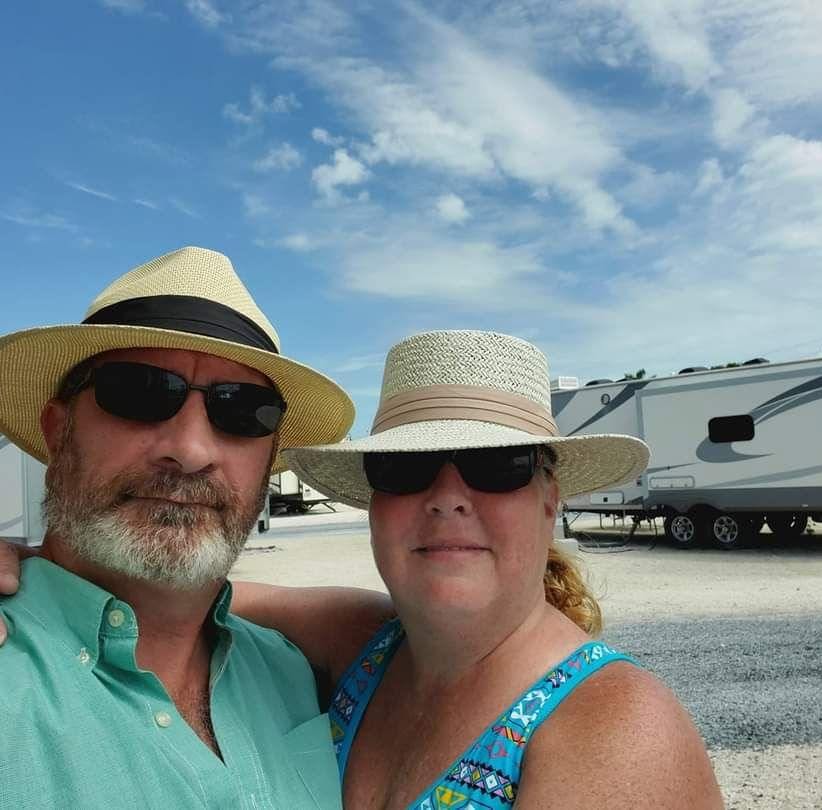
We’re Joe and Jana Martin. We spent four years traveling full-time in an RV, including eight months in the Florida Keys, before taking a break to homestead. Now we’re preparing for another chapter. That history shapes our approach: travel should make room for the life you want, with a practical plan for the responsibilities that come along. This guide helps you decide what that plan needs to include.
Decide what full-time means for your household
Some travelers change campgrounds frequently. Others stay in one region for a season, visit family for several weeks, or keep a home base. Living in an RV full-time describes your housing arrangement; it does not require a particular number of miles or states. Choose a rhythm that fits your work, energy, relationships, and finances.
Write separate answers to three questions: What are we moving toward? What responsibilities will continue? What would make us come off the road? Compare answers before buying equipment or announcing a departure date. One partner may picture constant discovery while the other pictures a quiet place to sit outside. Both wishes deserve a place in the plan.
Describe your preferred week. Include driving, paid work, errands, maintenance, rest, and recreation. If every day contains a major activity, the schedule probably needs breathing room. A longer stay can give you time to learn a place instead of repeatedly packing and unpacking your home.
Test the lifestyle before depending on it
A trial trip should include ordinary responsibilities. Make meals, wash dishes, manage rubbish, work if you plan to work, and spend an evening inside together. Test the sleeping arrangement and bathroom access. Notice what changes when the slides are retracted and what happens when the weather keeps you indoors.
Start close enough to support that an equipment problem does not become a major travel crisis. Choose a campground suitable for your rig and experience. Keep a notebook with three columns: something to practice, something to repair, and something to change. This separates a learnable skill from a genuine mismatch.
If you are considering a purchase, a rental can provide useful information about a type of RV. Confirm the rental agreement’s permitted use, insurance, mileage, pet rules, and operating requirements first. A short test cannot reveal every seasonal challenge, but it can prevent an expensive decision based only on a showroom walkthrough.
Choose the rig around the people using it
Begin with daily needs rather than a list of luxury features. Where will each person sleep, sit, work, and put personal items? Can you prepare a normal meal without moving half the kitchen? Is there room for pets and their equipment? Can everyone reach an exit without climbing over stored belongings?
Walk through travel mode as carefully as camping mode. Check access to the refrigerator, bathroom, and bed with slides in. Think about stops, illness, an unexpected overnight, or a campground where you cannot extend everything. Verify actual capacities and limits in the vehicle documentation; a large storage compartment does not establish how much weight you can carry.
Our Choosing Your Rig guide helps you compare layouts and travel arrangements. Once you own an RV, its manuals and component instructions should shape the operating checklists. Familiarity with a previous rig does not replace learning the current one.
Build a budget that includes the unexciting bills
Separate expenses into continuing obligations, travel costs, everyday living, and irregular needs. Include any remaining property expenses, financing, insurance, phone service, healthcare costs, fuel, campground fees, groceries, laundry, maintenance, and repairs. Add travel home and temporary accommodation to the questions you work through.
Use your own trial-trip spending to refine the plan. A low campsite fee can be offset by a long drive, extra services, or a location far from groceries. A longer stay may reduce packing and fuel use, but compare the complete terms before committing. Deposits, electricity billing, cancellation rules, and seasonal availability can change the calculation.
The RV Budgeting guide provides a framework. Keep a record of expenses that occur less often than monthly so a quiet spending month does not look like money that is automatically available for something else.
Make income and connectivity work together
If you need earned income, test the work arrangement before you make travel depend on it. Confirm where you may work, required hours, privacy needs, and what happens when your connection fails. A campground’s advertised Wi-Fi does not tell you whether you can complete a video meeting from your site.
Plan workdays first, then choose travel days around them. Packing, driving, checking in, and setting up are tasks of their own. An arrival at noon does not guarantee you will be ready for a one o’clock meeting. Have a realistic backup location for essential work and permission to use it.
Read Road Income for ways to evaluate work options without assuming a particular income is guaranteed. If the plan requires every month to go perfectly, change the plan before departure.
Set up mail, records, and a legal home base
A mailing address and a legal domicile are different questions. Changing where envelopes arrive does not by itself settle licensing, voting, taxes, insurance, or residency requirements. Start with your existing connections and get advice relevant to your circumstances before choosing a new state.
Make a list of institutions that need accurate address information. Ask each about mailing and residential address requirements. Do not assume that an address accepted for one purpose will be accepted for another. Keep copies of important records in a secure arrangement you can access when offline, with a separate backup.
See Mail Forwarding for RVers and Choosing a Domicile State for planning questions. Complete necessary identity verification and paperwork early enough to resolve mistakes before you move.
Create arrival and departure routines
Use a checklist based on your rig, not memory. Separate campsite inspection, parking, leveling or stabilizing as applicable, hookups, and interior setup. Your departure sequence should cover equipment storage, travel latches, connections, exterior inspection, and the final walk-around required for your setup.
Agree on who does each task and how completion is communicated. If something interrupts you, return to the last confirmed step. Visitors can wait until the RV is secure. An extra minute to check a connection is easier to manage than a problem several miles down the road.
The First Campground Arrival Checklist explains the process without pretending one operating sequence fits every RV. Keep emergency contacts and the campground’s physical address where both travelers can find them.
Make room for relationships and personal space
Sharing a small home can make ordinary differences more noticeable. Talk about quiet time, clutter, spending, driving, and how each person wants help. Avoid assigning permanent roles based on who happened to do a task first. Both adults should know essential information even if one usually manages it.
A useful household check-in is short: What worked this week? What needs attention? What would make next week easier? Discuss the travel plan when neither person is tired from driving. Put downtime on the calendar with the same seriousness as reservations.
Stay connected with people outside the RV. Regular calls, familiar communities, and time with friends or family can be part of a mobile life. You do not have to move constantly to prove that your lifestyle counts.
Plan for disruption before you need the plan
Consider a repair that makes the RV temporarily unavailable. Where would you stay, how would pets be accommodated, and what documents or essentials would you need? Review your coverage and assistance arrangements directly with the providers rather than relying on a general description online.
Build a weather and emergency routine. Know how you receive local warnings and where an appropriate shelter is located. Learn the exits and safety equipment in your RV. The U.S. Fire Administration’s RV guidance is a useful starting point for recognizing fire and carbon monoxide hazards; follow your equipment instructions and seek qualified help when something is unsafe.
Keep flexibility in the route. A sensible change of plan is a normal part of travel. It is not evidence that you have failed at full-time living.
Questions to settle before your departure date
- Have we tested ordinary life in the RV, including work and bad weather?
- Do our budget and income plans include irregular expenses and disruption?
- Are our address, insurance, records, and healthcare arrangements workable?
- Does each person understand essential setup and emergency information?
- Have we chosen a first stay that allows time to learn?
- Do we know what would make us pause, adjust, or return to a home base?
Compare three ways to spend your first season
A useful planning exercise is to write three versions of the same season: frequent moves, a few longer stays, and a home-base arrangement with trips away. Use the same household, rig, and obligations for each version. Changing several assumptions at once makes the comparison less useful. You want to see what the travel rhythm changes, rather than accidentally comparing three different lives.
For frequent moves, list the days spent packing, driving, arriving, and recovering. For longer stays, consider whether the location offers enough everyday services and activities for the entire visit. For a home-base arrangement, include the responsibilities and costs of keeping that base. None of these versions is automatically the right choice. Each solves different problems and introduces different work.
Then choose a first experiment. Perhaps you try two stays with a few quiet days between them instead of booking an entire season. Agree on what you want to learn: how much driving feels comfortable, whether work fits, or whether a longer stay feels restful or limiting. Write down the result before the next reservation so experience actually influences the plan.
Design a rainy-day layout before adding storage
Draw a simple plan of the interior with everyone inside. Give each person an activity: one is working, one is making lunch, and a pet needs a place to rest. Identify the paths between the door, bathroom, refrigerator, seats, and bed. Notice which activities cannot happen comfortably at the same time. A clear conversation about those conflicts is more useful than buying containers to conceal them.
Use the trial trip to test a few changes. A different work time, a cleared dining seat, or a smaller collection of kitchen tools may remove a problem without any purchase. If clothing repeatedly spills into another person's space, compare packing cubes on Amazon (paid link). Measure the compartment first and choose a size you can lift out without unloading everything around it.
Cubes organize clothing; they do not make the load weight disappear. Keep the travel arrangement within the applicable limits and secure belongings appropriately. If the floor plan cannot support an important need, record that honestly. Organization can improve a workable layout, but it cannot create a private room or enlarge a doorway.
Build a campsite decision record you can reuse
Create one short record for every reservation. Include the location, dates, site, total quoted cost, cancellation terms, arrival instructions, services, and the questions you confirmed with staff. Add the source and date of any information that might change. Keep essential details offline so you are not depending on a connection at the entrance.
After the stay, add what you learned about your own needs. Was the site comfortable during work hours? Could you reach groceries without a long drive? Did the entrance require more attention than expected? Distinguish your experience from assumptions about other sites or seasons. This produces a useful personal reference without turning one visit into a universal campground judgment.
A basic paper record can be enough. If you prefer handwritten notes, compare travel notebooks on Amazon (paid link). Choose something easy to store and use rather than a complicated journal you feel obliged to decorate. The value comes from recording decisions and reviewing them, not from the notebook itself.
Make repair downtime part of the household plan
Imagine that a service appointment lasts longer than expected. Work through where you would sleep, how you would move around, what happens to pets, and which items must come out of the RV before it enters a workshop. Ask your service provider about its actual arrangements rather than assuming you can remain inside or leave animals there.
Keep a small list of essentials you could collect quickly: documents, necessary personal items, chargers, work equipment, and appropriate pet supplies. Review temporary accommodation and transport questions with relevant providers where coverage or reimbursement matters. Your budget should use confirmed terms, not a general promise that assistance will handle everything.
For organizing the papers you need during a disruption, compare compact document organizers on Amazon (paid link). Check the dimensions against the originals you carry and store it securely. An organizer helps retrieval; it does not provide the protection of a properly chosen secure storage arrangement or replace digital backups.
Protect rest and personal time from the travel schedule
A mobile lifestyle still needs days without a major task. Consider the difference between a day without paid work and a day without obligations. Grocery shopping, laundry, driving, maintenance, and planning can fill a supposedly free day before you spend any time enjoying the location.
Choose a reasonable weekly pattern and compare it with what actually happens. If errands repeatedly consume your rest time, combine them where practical or change the length of your stay. If one person needs solitude while the other wants to explore, plan both. Independent activities can be part of sharing the trip rather than a sign that something is wrong.
Discuss what makes rest easier inside the RV: a comfortable seat, less clutter, reduced noise, or a predictable evening. Start with changes to the routine. For a small reading or utility light, compare rechargeable LED lanterns on Amazon (paid link). Consider brightness settings, charging arrangements, secure travel storage, and the manufacturer's instructions. A light is an optional convenience, not a reason to accept an unsuitable campsite or unsafe setup.
Use a buying rule that leaves room to learn
Before purchasing an optional item, write the problem it will solve and where it will travel. Check what you already own. Then consider whether a change of routine could solve the same problem. This short pause is particularly useful when a neighbor's attractive setup makes your own equipment suddenly feel inadequate.
For a compact kitchen, food containers are worth evaluating only after you know the meals and quantities involved. Compare stackable food-storage containers on Amazon (paid link), checking dimensions, food-contact suitability, cleaning instructions, and whether the lids are practical for your household. Do not assume a photograph demonstrates a good fit in your refrigerator or cupboard.
After a few weeks, review the purchases against the original problems. Keep items that earn their space and reconsider those that create more packing work than benefit. Record what you would choose differently. You are building an arrangement around evidence from your own days, not assembling a permanent collection before you understand the needs.
Turn a difficult week into a useful adjustment
Suppose a week includes a long drive, two work deadlines, a laundry trip, and a minor repair appointment. You may finish it feeling that full-time travel is exhausting. Before making a sweeping judgment, identify which parts were fixed commitments and which were choices. Could the drive have happened on another day? Was the stop too short? Did a preventable search for supplies consume the available margin?
Choose the smallest change that addresses the cause. Extend a stay, move a deadline away from departure, store arrival equipment together, or remove a task that does not matter. Evaluate that change during the next week. If a major need remains unworkable, give it serious attention instead of treating every difficulty as a beginner mistake.
This is how a trial season becomes a sustainable plan. Keep the parts that support your household, reconsider the parts that repeatedly fail, and let the route follow the life you are trying to build. The freedom to adjust is one of the most practical freedoms you can give yourselves.
Write your own first-season agreement
Before making the next reservation, write a short household agreement about the coming season. Describe the intended pace, the work that must be completed, the amount of personal time each person needs, and how you will decide whether to extend a stay. Include what would make you postpone a move. Keep it practical enough that you could use it during a tired week.
Add a spending decision rule. You might agree to discuss optional purchases above a household-selected amount or to wait until after a test trip before adding more equipment. The amount and timing are yours to choose. The useful feature is a shared process that prevents one person's assumptions from becoming the plan by default.
Finally, choose a review date and the questions you will answer. Are ordinary days comfortable? Is work sustainable? Are the continuing responsibilities manageable? What do you want more time for? Compare the answers with the original reason you wanted to travel. A good review can lead to a longer stay, a different region, a change of rig, or a return to a home base. Each can be a thoughtful response to what you have learned.
Frequently asked questions
Do full-time RVers have to travel all the time?
No. Your schedule can include longer stays, seasonal travel, and visits to a home base. Confirm the rules and permitted length of stay at each location. Choose the pace that supports your household rather than a mileage goal.
Should we sell everything before trying it?
A trial trip gives you better information before making major commitments. Compare storage, housing, financial, and personal consequences carefully. Reversible steps can make the transition easier to evaluate.
What should we do first?
Describe the ordinary week you want, calculate the obligations that continue, and arrange a practical test trip. Then use the Getting Started guide to turn those findings into your next decisions.
For practical RV tips and updates, join The Open Road Letter.