A full-time RV startup checklist you can work through in stages
A full-time RV startup checklist should help you make decisions in the right order, not rush you toward a departure date. Start with the life you want to support, test the arrangement, and finish the details that keep your household running. Buying an RV is one part of that process. Address records, income, healthcare logistics, and a plan for your first stay matter just as much.
This article contains paid Amazon links. As an Amazon Associate I earn from qualifying purchases. The links open Amazon product searches so you can compare options; check compatibility, dimensions, and current seller details before buying.
In this guide
- A full-time RV startup checklist you can work through in stages
- Stage one: define the trip before choosing equipment
- Stage two: build a realistic financial picture
- Stage three: choose and inspect the RV
- Stage four: arrange addresses and essential records
- Stage five: plan healthcare and pet logistics
- Stage six: downsize and load gradually
- Stage seven: rehearse the operating routines
- Stage eight: choose a forgiving first stay
- The final household review
- Put tasks in dependency order
- Make a transition calendar with three kinds of dates
- Create a document readiness station
- Give every purchase a reason and a deadline
- Rehearse a complete departure rather than isolated chores
- Run a first-evening rehearsal inside the RV
- Make a separate list for the home you leave behind
- Use a readiness review with evidence
- Leave a clear handover for the first week
- Frequently asked questions
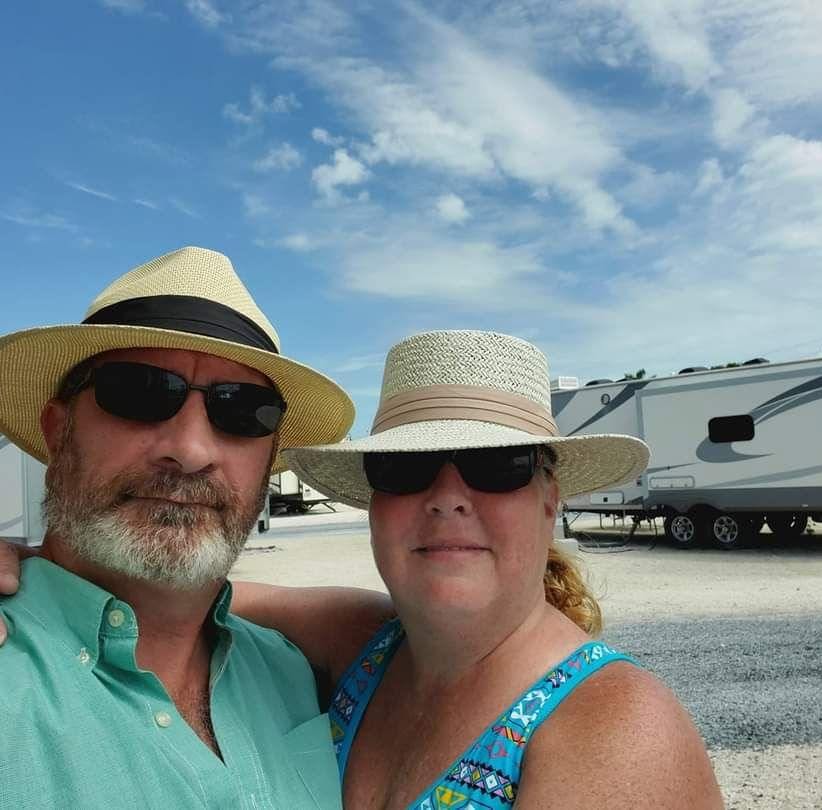
We’re Joe and Jana Martin. After four years of full-time RV travel, including eight months in the Florida Keys, we took a break to homestead. As we plan our return to travel, we value a transition that leaves room to learn. Use this checklist as a planning framework and adapt the technical steps to your own rig and its manuals.
Stage one: define the trip before choosing equipment
Write a simple description of your first season. Include who is traveling, pets, work requirements, preferred regions, and how long you hope to stay in one place. List the commitments that require you to return to a particular area. You can revise the route later, but these constraints will influence the type of RV and camping arrangement you need.
Separate needs from preferences. A workable sleeping space, legal vehicle capacity, or reliable work arrangement belongs on the needs list. A particular cabinet color belongs elsewhere. This helps when two appealing rigs solve different problems.
- Agree on why you want to travel full-time.
- Describe an ordinary week, including chores and rest.
- List continuing family, property, work, and health obligations.
- Decide what would make you postpone or pause travel.
- Choose a trial-trip goal before making irreversible commitments.
If you and your traveling partner have different expectations, work through them now. A checklist cannot settle a disagreement about whether the next chapter is supposed to feel adventurous, restful, or both.
Stage two: build a realistic financial picture
Record continuing bills and expected road expenses separately. Include debt payments, insurance, communications, any retained property, campground stays, fuel, food, laundry, maintenance, and travel home. Create categories for irregular expenses so they do not disappear from the plan simply because they are not due this month.
A startup budget is different from a monthly budget. It may include training, an inspection, equipment needed for your particular RV, registration, moving costs, storage, and deposits. Confirm current amounts with the relevant providers. Avoid financing assumptions based on a sample payment in an advertisement.
- Record the money available for transition costs.
- Identify dependable income and the conditions attached to it.
- Test any work arrangement that will support your travel.
- Ask providers about coverage, exclusions, and out-of-area services.
- Decide how repairs or a disrupted trip would be funded.
- Compare your expected budget with actual spending on a test trip.
Our RV Budgeting guide explains the categories. Keep the numbers specific to your household; someone else’s inexpensive month may depend on a paid-off rig, free accommodation, or circumstances you do not share.
Stage three: choose and inspect the RV
Compare how a rig functions in travel mode and camping mode. Check sleeping, cooking, bathroom access, seating, storage, and work space. Think about a rainy day and an overnight when you cannot extend slides. Include the tow vehicle or towed vehicle in the evaluation when applicable.
Obtain the documentation needed to understand capacities, maintenance, and component operation. Use qualified inspectors or technicians for issues beyond your skills. If a repair is required, confirm the work and documentation rather than treating a seller’s assurance as the final answer.
- Evaluate the layout against your needs list.
- Check vehicle and towing compatibility using authoritative ratings.
- Arrange appropriate inspections before committing.
- Identify immediate repairs and maintenance.
- Collect manuals, service records, warranty information, and keys.
- Get instruction on the equipment you will operate.
The Choosing Your Rig guide is a useful companion. You are selecting a home and a vehicle system, so give both sides of the decision attention.
Stage four: arrange addresses and essential records
Mail delivery does not automatically establish legal domicile or satisfy every organization’s residential address rules. Start with the facts of your household and confirm requirements with the relevant agencies and professional advisers. Record what they need, how you will provide it, and whether an in-person visit is required.
Use a separate checklist for address changes. Some senders need to be contacted directly even when postal forwarding is active. Protect identity records, account details, and digital scans with secure access and a backup. Both travelers should know how to retrieve essential information.
- Choose a workable mail receiving arrangement.
- Complete required identity verification before you depend on it.
- Confirm licensing, registration, voting, tax, and insurance questions.
- Update institutions directly where required.
- Review account recovery methods and emergency contacts.
- Keep accessible copies of essential documents without leaving them exposed.
Read Choosing a Domicile State and Mail Forwarding for RVers before assuming one new address solves every administrative task.
Stage five: plan healthcare and pet logistics
Make a calendar of appointments, routine care, prescription needs, and any services that must be arranged before leaving an area. Ask your clinicians, pharmacy, and insurer how travel affects access and scheduling. Use their answers for your circumstances rather than a general article’s assumptions.
For pets, talk with your veterinarian about records, identification, travel needs, and a plan for urgent care. Confirm campground pet policies before reserving. Arrange a safe travel setup suitable for your vehicle and animal; do not rely on where the pet prefers to sit while parked.
- Schedule necessary appointments before departure.
- Confirm coverage and how to find appropriate care on the road.
- Discuss medication storage, refills, and travel timing with professionals.
- Gather relevant records and contact information.
- Verify pet identification and campground requirements.
- Plan what happens if the RV needs to stay at a repair facility.
Our Road Wellness guide helps organize the questions. This stage is about continuity and access, not changing treatment or substituting travel advice for care.
Stage six: downsize and load gradually
Measure the storage you actually have and decide where items will travel securely. Sort possessions by use rather than trying to fill every cabinet. Keep exits, controls, ventilation, and service access clear. Empty space can make daily life easier and leave room to change your setup after a few trips.
Packing must respect the limits of the complete vehicle arrangement. Storage volume is not carrying capacity. Obtain appropriate loaded weights and compare them with the applicable ratings using your vehicle documentation and qualified guidance where needed. Include water, fuel, people, pets, and supplies in your planning.
- Sort belongings into take, store, sell, donate, recycle, and discard.
- Keep only useful duplicates and items that fit the rig.
- Secure contents for travel with suitable methods.
- Load essentials where they can be reached when needed.
- Verify the loaded setup against its limits.
- Revisit the list after your first actual stay.
See Downsizing for Full-Time RVing and the Move-In Packing List for practical ways to work through this stage.
Stage seven: rehearse the operating routines
Create arrival and departure lists from your manuals and instruction. Practice on a calm day. Learn the water, electrical, waste, heating, cooling, slide, leveling, and towing systems that apply to your rig. Stop and seek qualified help when you encounter damage, a fault, or an unfamiliar hazard.
Build a separate emergency orientation. Locate exits, alarms, shutoffs, fire extinguishers, and essential contact information. Read the U.S. Fire Administration’s RV safety guidance and follow the inspection and maintenance instructions for your equipment.
- Practice hitching or connecting the towed setup where applicable.
- Rehearse parking with agreed communication signals.
- Test a complete arrival and departure checklist.
- Learn how to stop safely if the procedure is interrupted.
- Make essential tasks understandable to both adults.
- Record unresolved problems and fix them before departure.
Do not turn a departure deadline into a reason to ignore a fault. Changing a reservation is frustrating; leaving with an unsafe or unusable system creates a different problem.
Stage eight: choose a forgiving first stay
Your first full-time stop should give you time to settle in. Confirm access, site fit, services, check-in arrangements, and local essentials. Avoid stacking a long drive, a difficult arrival, and a work deadline into the same day. A familiar or nearby campground can be a useful starting point.
Save the reservation details and directions somewhere available without mobile service. Review your route using current information appropriate to your vehicle. Have an alternative if weather, delays, or a problem make the original plan unsuitable.
- Confirm the complete site and vehicle requirements.
- Review the route and expected conditions.
- Save contact details and arrival instructions offline.
- Plan daylight and energy margin for setup.
- Stock simple food for the first evening and morning.
- Keep your next few days deliberately light.
Use our Campground Planning guide and First Campground Arrival Checklist to prepare.
The final household review
A day or two before departure, review the checklist together. Identify what is complete, what is waiting on someone else, and what prevents safe travel. Give each unresolved item an owner and a next action. Avoid a vague note such as “sort insurance”; write down the question, provider, and answer you still need.
Leave room for a short first-month review. Your First Month RV Routines will improve as you learn what works. The goal is a dependable starting arrangement, followed by adjustments based on experience.
Put tasks in dependency order
A checklist becomes easier to use when it shows what must happen before another task can be completed. For example, you cannot confidently choose storage containers until you know the available space, and you cannot judge your loaded arrangement before you know what will actually travel. Separate decisions, appointments, purchases, practice, and verification instead of treating every task as something you can finish immediately.
Create a line for the task, the person responsible, the information needed, and the next action. Replace “prepare the RV” with specific actions such as collecting component manuals, confirming an inspection appointment, and documenting unresolved findings. A clear task can be handed to another person and checked when complete. A vague task tends to remain on the list while everyone assumes someone else is handling it.
For a household with two travelers, review dependencies together. If one person is waiting for a quote and the other is buying related equipment, stop and check whether the purchase depends on that answer. The goal is to reduce rework and unnecessary expense, not to make the list look busy.
Make a transition calendar with three kinds of dates
Use fixed dates for appointments and obligations you cannot easily move, target dates for tasks you control, and review dates for decisions that need more information. A target departure date belongs in the second category until essential requirements are complete. This keeps an appealing date from quietly overruling safety, finances, or an unresolved household responsibility.
Work backward from appointments that require documents or preparation. Add time to obtain those documents and to correct a problem. Include the return trip or follow-up call when relevant. A task is not finished merely because you attended the first appointment; record the actual outcome and anything still required.
If paper planning suits you, compare undated planners on Amazon (paid link). Choose a layout with room for task owners and follow-up dates. An ordinary calendar you already own is equally useful if it makes the next action visible. Avoid creating a planning system that takes longer to maintain than the tasks it organizes.
Create a document readiness station
Gather records in one secure location while you prepare. Sort them into originals needed for appointments, useful copies, vehicle and component information, and records that must remain accessible during travel. Confirm requirements with the organization that will receive a document before deciding a scan or photocopy is sufficient.
Use a checklist to record whether each item is present, current, and backed up. Both travelers should know how to retrieve essential information. Keep account credentials and sensitive personal information protected rather than writing them on the front of a household checklist. A folder on the kitchen table may be convenient during preparation but is not a long-term security plan.
For physical organization, compare expanding document files on Amazon (paid link). Check whether your papers fit without folding and whether the closure works when the file is full. Label sections by the task or organization so you can find an item during an appointment without sorting through unrelated records.
Give every purchase a reason and a deadline
Divide purchases into equipment required for your exact setup, replacements for unsuitable or damaged items, and optional conveniences. For each, write the specifications that matter, the place it will be stored, and when you actually need it. This prevents a sale or a general beginner bundle from determining the loading plan.
Confirm compatibility from authoritative instructions before ordering technical equipment. Check ratings, connection types, installation requirements, and what is included. Allow time to inspect deliveries and resolve errors before departure. An unopened box is not proof that the correct item is on board or that you know how to operate it.
For clean-water equipment, compare RV drinking-water hoses on Amazon (paid link). Select equipment intended for the task and suited to your RV, expected connection distance, and storage. Keep it separate from waste-handling equipment. A comparison link is a place to review options, not a universal endorsement of every product in the results.
Rehearse a complete departure rather than isolated chores
A useful rehearsal includes the time before leaving: preparing meals, putting belongings away, managing pets, retracting or securing equipment as directed, completing the vehicle procedure, and doing a final inspection. Practice when you can stop without pressure. Keep the manuals and your draft list available.
Have one person observe the process and record where uncertainty or interruption occurred. If you need to search for a tool, find a better storage location. If the order is unclear, check the relevant instructions. If equipment behaves unexpectedly, stop and resolve the issue appropriately rather than treating another attempt as the solution.
For a printed checklist used near the RV, compare covered clipboards on Amazon (paid link). Choose a manageable size and a secure place for it in travel. Keep private documents elsewhere. The clipboard's job is simply to make the current checklist available where you perform the task.
Run a first-evening rehearsal inside the RV
Spend an evening using only the supplies you intend to carry. Prepare a familiar meal, wash up, organize sleeping space, and get ready for the next morning. Notice which item you repeatedly leave the RV to retrieve and which packed item you move out of the way. Those observations are more useful than guessing what might be needed.
Test whether essential items remain reachable in the travel configurations you expect to use. Consider an overnight stop or a delayed arrival where you cannot complete the usual campsite setup. Follow the operating requirements for your RV and do not use an appliance in a condition its instructions do not permit.
If clothes and toiletries need a simpler system, compare zippered packing pouches on Amazon (paid link). Measure first and keep categories simple. A small morning kit may be more practical than several overlapping organizers. Give everyone a chance to use the arrangement before declaring the packing finished.
Make a separate list for the home you leave behind
If you retain property, write down who will handle routine needs and who will respond to a problem. Discuss access, notifications, deliveries, bills, maintenance, and the circumstances that require a call. Confirm relevant requirements with your insurer or other providers rather than assuming that a property left for an extended period is treated the same as one occupied daily.
Keep arrangements concrete. A trusted person should understand what you are asking, where instructions are kept, and how to contact you. Do not assume that a family member who agreed to collect mail also agreed to manage repairs, landscaping, and unexpected visitors. Document the scope and revisit it if travel plans change.
Add those continuing expenses and responsibilities to the road plan. Keeping a home base can be a good household choice, but its work does not disappear when the RV leaves. An accurate transition checklist includes both sides of the departure.
Use a readiness review with evidence
Before finalizing departure, review each essential requirement and ask what confirms completion. A booked service visit is different from a resolved fault. An insurance quote is different from active coverage. A box of equipment is different from a checked and compatible setup. Record the evidence you actually have and the next step where something remains open.
Consider a hypothetical delay: a component is awaiting a part, a record has not arrived, or an appointment needs to be repeated. Decide whether postponing, changing the first stay, or completing the requirement before departure provides the workable path. Do not let money already spent on reservations turn an unresolved issue into an accepted risk.
Finish by agreeing on the first review after departure. Set a time to discuss the budget, pace, packing, routines, and any outstanding questions. The transition is complete when your household has a dependable starting arrangement and a way to adapt it, not when every possible improvement has been purchased.
Leave a clear handover for the first week
Write down the tasks that continue after departure, including pending deliveries, follow-up appointments, account changes awaiting confirmation, and questions from the trial trip. Assign an owner and a next review date. Keep this short list separate from completed startup tasks so unresolved work remains visible.
Check that each traveler can find essential contact details and reservation information. Discuss what would make you change the first week's plan and how you will make that decision together. A practical handover avoids treating the move itself as proof that every preparation task is finished.
During the first stay, review the list at a calm time and close items only when their actual outcome is confirmed. Add any new issue with the same level of clarity. You are moving from preparation into an everyday routine, and the handover helps carry the important information across that transition.
Frequently asked questions
How long should this checklist take?
It depends on your rig, household, records, work, and commitments. Use completion of important tasks rather than a generic countdown to decide whether you are ready. Start with items that need appointments or documents from other people.
What if we cannot finish everything by our planned date?
Separate preferences from essential requirements. Delay departure when an unresolved issue affects safe operation or a responsibility you cannot manage from the road. Change the route or first stay when that provides a workable solution.
Which checklist should we keep using after departure?
Keep your rig-specific arrival and departure lists, maintenance records, spending plan, and household calendar. This startup list becomes a reference; the everyday routines become the tools you use most often.
For practical RV tips and updates, join The Open Road Letter.