A move-in packing list for RV life should fit your own setup
A move-in packing list for RV life is most useful when it begins with the people, pets, and systems sharing the space. Pack what you need to operate your particular RV and live comfortably through an ordinary week. Leave room to learn which extras are worthwhile after you have traveled. A list that fills every compartment is not automatically a complete or suitable list.
This article contains paid Amazon links. As an Amazon Associate I earn from qualifying purchases. The links open Amazon product searches so you can compare options; check compatibility, dimensions, and current seller details before buying.
In this guide
- A move-in packing list for RV life should fit your own setup
- Start with three lists and a storage map
- Documents and information
- Rig-specific setup and utility equipment
- Kitchen essentials by meal
- Clothing and laundry
- Bedding and bathroom supplies
- Cleaning and maintenance information
- Work, communications, and charging
- Pet and outdoor items
- Pack a first-evening kit
- Secure the load and review after a test trip
- Make an inventory that describes a working home
- Pack clothing by the way you retrieve it
- Test kitchen containers with an actual grocery trip
- Create a clean-water equipment inventory
- Choose a document arrangement for travel and appointments
- Give lights and chargers a shared home
- Build a first-night access test
- Review the departure load as well as the parked layout
- Use a trial-trip packing review with four outcomes
- Frequently asked questions
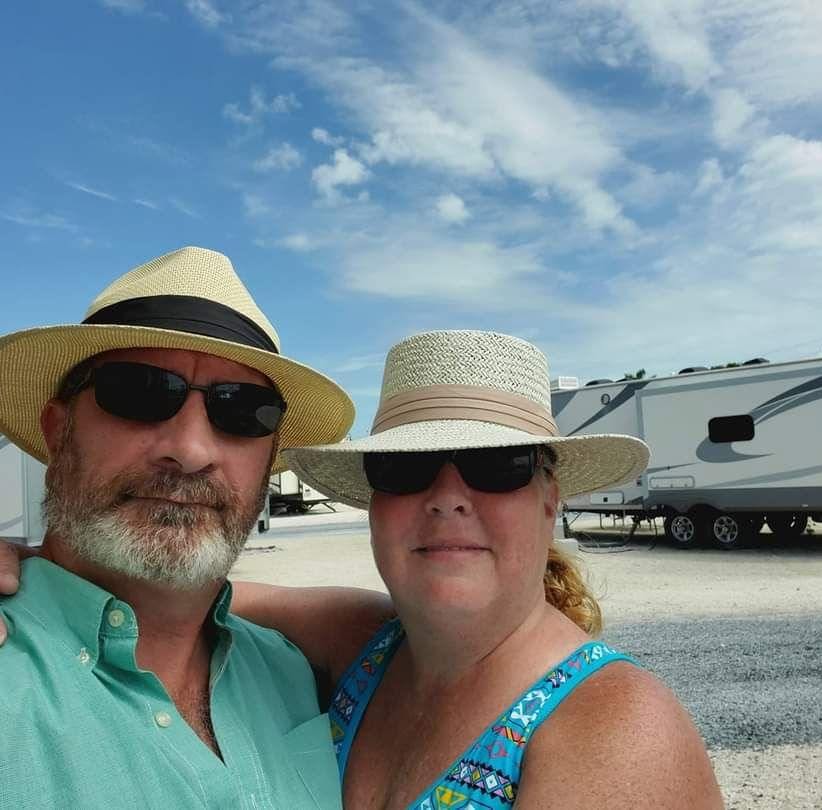
We’re Joe and Jana Martin. We spent four years traveling full-time in an RV, including eight months in the Florida Keys, before taking a break to homestead. Preparing for our next chapter means thinking carefully about what earns its place. Use this guide to build your own inventory rather than buying every item on a universal shopping list.
Start with three lists and a storage map
Separate required equipment, daily household belongings, and optional comfort items. Required equipment comes from your RV’s systems, manuals, vehicle arrangement, and planned campsite services. Daily belongings come from your household’s actual routine. Optional items should solve a problem you expect to have, with a suitable place to travel.
Measure storage openings and interiors. Note what you can reach with slides retracted and what must remain clear for equipment, ventilation, exits, or service. Assign locations before filling containers. Keep arrival items accessible before you have expanded or unpacked the interior.
Review the carrying limits of the complete loaded setup and arrange to verify it appropriately. Include the people, pets, liquids, accessories, and belongings that will actually travel. Storage volume does not tell you the permitted load. Consult vehicle documentation and qualified help when you need to interpret ratings or weights.
Documents and information
Keep licenses, registration, insurance information, reservation details, emergency contacts, and relevant manuals accessible and secure. Add records you need for work, healthcare logistics, pets, and continuing household responsibilities. Confirm whether an original or a copy is required for a particular purpose.
Make important trip information available without mobile service. Use a secure backup for records that would be difficult to replace. Both authorized adults should understand where essential information is kept without leaving sensitive documents exposed to visitors or visible through a window.
- Vehicle, trailer, and towed-vehicle records as applicable.
- Insurance and assistance contact details.
- RV and component manuals with model information.
- Reservation details, arrival instructions, and physical addresses.
- Personal, work, and pet records needed for your trip.
- A secure method for account access and recovery.
Read Mail Forwarding for RVers for the ongoing paperwork routine. Packing the documents is only useful if you also keep them current.
Rig-specific setup and utility equipment
Build this category from the systems you actually have. Confirm connection types, electrical requirements, lengths, ratings, and compatibility before purchasing equipment. Learn how each item is used and maintained. Do not use a generic list as a substitute for your manuals or qualified instruction.
Your list may need suitable water equipment, electrical connection equipment, waste-handling supplies, and the parking, leveling, stabilizing, or towing equipment specified for your setup. Separate clean and waste-related supplies. Choose storage that keeps equipment secure and allows wet or dirty items to be managed appropriately.
Inspect items before departure. Replace damaged or unsuitable equipment through an appropriate process instead of assuming it will be good enough for one trip. Keep needed protective and hygiene supplies with the task equipment so you are not searching for them during arrival.
The RV Gear & Apps guide explains how to evaluate compatibility. Buy for your own rig and camping arrangement rather than a neighbor’s equipment collection.
Kitchen essentials by meal
Plan a few breakfasts, lunches, dinners, and snacks you normally enjoy. List the utensils, cookware, dishes, and storage needed for those meals. Check what fits your sink, cabinets, cooking equipment, and refrigerator. Start with the items that support that plan.
- Everyday dishes, cups, and cutlery for the household.
- Appropriate cookware and a small set of useful preparation tools.
- A practical cutting surface and suitable food-storage containers.
- Dishwashing, drying, and rubbish supplies.
- Familiar ingredients for the first few days.
- A simple arrival-night meal and an easy next-morning breakfast.
Keep perishable food in suitable storage and follow food-safety guidance for your equipment and trip. Do not buy bulk quantities until you know the available space and how quickly the household uses them. A smaller pantry is easier to manage when the contents support meals you actually cook.
Clothing and laundry
Pack around the climate, activities, work requirements, and laundry access you expect. Include comfortable indoor clothing and weather protection appropriate to the trip. Keep shoes and outerwear where they will not obstruct exits or become loose in travel.
Try living from the planned wardrobe before moving in. Notice whether you have enough between laundry visits and whether you repeatedly choose the same items. Adjust from that evidence rather than packing a duplicate wardrobe for every possible scenario.
Add a manageable laundry bag, suitable supplies, and whatever your planned facilities require. If you have an onboard appliance, follow its instructions and consider how its use fits your utility arrangement. Make a plan for towels and damp items as well as clothes.
Bedding and bathroom supplies
Check mattress dimensions and storage before buying bedding. Choose what supports comfortable sleep and a practical washing routine. Keep a suitable spare when it solves a real need, while avoiding a cabinet full of bulky duplicates.
Pack toiletries you use, towels that fit your routine, and bathroom supplies compatible with the RV’s systems. Keep products labeled and stored according to directions. Medicines need storage and refill arrangements discussed with the relevant professionals, not simply a place in the bathroom cabinet.
The Road Wellness guide helps organize healthcare logistics. Keep essential personal items reachable during a travel stop or an unexpected overnight when the RV is not fully set up.
Cleaning and maintenance information
Choose cleaning products compatible with your surfaces and systems. Include basic tools for ordinary cleaning, rubbish management, and spills. Keep labels intact, follow instructions, and store chemicals separately from food and out of reach of children and pets.
Maintenance equipment should match tasks you understand and can appropriately perform. A large toolbox does not replace knowledge or a qualified technician. Keep maintenance schedules, service records, component details, and contact information accessible so you can arrange help when needed.
Check the travel security of liquids and tools. Protect against movement, leaks, and damage using appropriate storage methods. Leave access to equipment that must be inspected or serviced; a packed compartment should not prevent you from reaching an essential control.
Work, communications, and charging
List the tasks you must complete and the devices needed for them. Include suitable charging equipment and a secure place for devices in travel. Confirm how the arrangement will be powered in the camping conditions you plan to use.
If work depends on connectivity, test your actual tasks and identify a backup arrangement. Keep important contact details and trip information available when service is unavailable. Protect confidential work and personal records according to the requirements that apply to them.
Avoid adding several subscriptions or devices without a defined purpose. Start with the job the equipment must do and compare the complete costs and limitations. See Road Income and RV Gear & Apps for planning questions.
Pet and outdoor items
For pets, plan food, water, identification, records, cleanup supplies, bedding, and a safe travel arrangement appropriate to the animal and vehicle. Discuss health and travel needs with your veterinarian. Confirm campground policies before reserving and keep pet essentials reachable during stops.
For outdoor comfort, begin with items you actually use and can store securely. Suitable seating and a modest arrangement may be enough for the first stay. Check campground rules and conditions before adding mats, shade equipment, cooking equipment, or other accessories.
Think about wet and dirty storage. An item that is pleasant at the campsite still needs a suitable place on departure morning. Avoid equipment that obstructs paths, affects neighbors, or cannot be secured appropriately in the RV.
Pack a first-evening kit
Keep a small set of essentials available without unpacking everything: arrival instructions, a light source, weather-appropriate clothing, pet needs, a simple meal, toiletries, and sleeping essentials. Add the setup equipment your rig requires in its own accessible location.
This is not an emergency kit or a substitute for required equipment. It is a way to make the first evening manageable while you learn where things belong. Label the storage and tell everyone what is inside so one person is not answering every question.
Use the First Campground Arrival Checklist to connect packing with the order you will use items. If something is needed before opening a slide or unloading a compartment, store it accordingly.
Secure the load and review after a test trip
Close and secure items according to the RV and component instructions. Check cabinets, drawers, doors, appliances, loose equipment, and travel positions. Keep exits clear and avoid storing heavy or hazardous items where they can move into occupied spaces. Get appropriate guidance if you are unsure how to secure something.
Verify the loaded vehicle arrangement against its applicable limits. A final visual inspection cannot establish weight. Include the actual supplies and liquid levels expected for travel when you evaluate the setup.
After a short stay, make three lists: used often, needed but missing, and carried without a clear use. Reconsider optional items before buying more storage. The Downsizing guide can help you decide what to remove or relocate.
Make an inventory that describes a working home
Start with a day in the RV and list the tasks involved: getting dressed, making breakfast, working, caring for pets, cleaning, relaxing, and sleeping. Add arrival and departure equipment from your rig-specific instructions. This gives every packed category a purpose instead of turning the list into a collection of products someone else owns.
For each category, record the item, quantity, location, and any compatibility or storage condition you need to verify. Include whether the item remains reachable in travel mode. Keep optional purchases in a separate section until you know their purpose and where they will go.
Review the list with everyone traveling. A person's essential work or personal item can be easy for another person to overlook. Resolve shared-space decisions before loading, and include the complete load in your vehicle-capacity review. A packing agreement is more useful than discovering after departure that two people assigned the same compartment to different things.
Pack clothing by the way you retrieve it
Choose categories that make sense during an ordinary morning. You might separate everyday clothes, sleeping clothes, and a small set for a particular activity. Keep the system understandable so laundry can be put away without reconstructing the whole plan. Avoid a category so broad that finding one item means emptying the drawer.
If separate containers would help, compare packing cubes on Amazon (paid link). Measure the storage opening and interior, and think about how a filled cube will be removed. Review the material and cleaning instructions. A cube that fits neatly on a bed may not fit the narrow space where you intend to use it.
Keep enough flexibility to adjust the wardrobe after a trial trip. Compression changes the space used, not the clothing's weight. Do not let a smaller bundle encourage you to exceed the applicable loading limits or carry a second wardrobe with no clear use.
Test kitchen containers with an actual grocery trip
Shop for the meals you planned, then load the food into the available refrigerator and pantry space. Notice bulky packaging, unstable stacks, and items that are difficult to see. Check that the arrangement permits the storage and appliance conditions required by the manufacturer.
Compare stackable food-storage containers on Amazon (paid link) if a defined food category needs a different container. Check dimensions, food-contact suitability, temperature and cleaning instructions, closure, and whether the lid is practical for the household. Matching containers are optional; useful fit and safe food handling are the priorities.
Label contents and dates where helpful, especially when removing original packaging. Keep information needed for allergens, preparation, or product identification. Do not decant something simply to improve appearance if doing so makes it harder to use safely or remember what it is.
Create a clean-water equipment inventory
Write down the water arrangement you plan to use and the exact equipment required by your RV's instructions. Confirm the intended use, connection type, ratings, lengths, and storage. Keep potable-water supplies separate from waste-handling equipment and maintain them as directed.
For a suitable connection hose, compare RV drinking-water hoses on Amazon (paid link). Review specifications and care directions rather than choosing by color or a photograph alone. Include the hose, fittings, and related equipment in the actual storage test. The longest available option is not automatically the most manageable one.
Inspect what you receive before departure. Check that it matches the order and intended setup and that instructions are present. A sealed package belongs on the “received” list; it belongs on the “ready” list only after you have confirmed what it is and how it will be used.
Choose a document arrangement for travel and appointments
Keep trip details and records you need while traveling accessible without exposing private information. Separate active paperwork from reference material and originals requiring special care. Confirm which records must be originals for the tasks you expect to complete.
Compare compact document organizers on Amazon (paid link) if a defined collection needs physical sorting. Check the full dimensions and closure when loaded. Store it securely and maintain an appropriate backup. Do not treat an organizer as protection against theft, fire, or water beyond the capabilities actually documented for the product.
Both authorized adults should know where essential records and contact information are located. If one normally manages the paperwork, practice retrieving a reservation or service record with the other person. The system should still work when the usual organizer is occupied or unavailable.
Give lights and chargers a shared home
List the devices you actually carry and the suitable charging equipment each requires. Check how the arrangement will be powered in the camping conditions you plan to use. Keep cords and devices secure in travel and follow the relevant electrical and battery instructions.
For an accessible utility light, compare rechargeable LED lanterns on Amazon (paid link). Consider brightness settings, charging, intended conditions, size, and travel storage. A suitable light can make an ordinary parked task easier, but it does not replace planning a safe arrival or obtaining help for an unfamiliar system.
Choose a consistent place where the light returns after use. Add checking or charging it to an appropriate preparation routine. An item that is technically on board but cannot be found when needed is not functioning as part of the plan.
Build a first-night access test
With the RV in an appropriate configuration for the test, retrieve the items needed for an evening and morning. Include food, toiletries, sleeping essentials, pet supplies, clothing, documents, and any equipment required for your setup. Follow all operating conditions; do not test an appliance in a configuration its instructions do not permit.
Record what requires moving another item or opening a space that may not be available during a stop. Reassign locations where practical. Keep an overnight bag or small kit only if it reduces effort without duplicating half the RV's contents.
Then put everything away and repeat the essential retrieval with the other traveler. This reveals assumptions about where things belong. Clear labels and a simple map can help, but a system with too many exceptions usually needs fewer categories or a better location rather than a longer explanation.
Review the departure load as well as the parked layout
An arrangement can be comfortable while camping and unsuitable when moving. Check travel latches, appliance positions, loose items, liquids, and heavy equipment according to the RV and component instructions. Consider what could shift or obstruct an occupied area. Seek qualified guidance when you do not know an appropriate securing method.
Verify the complete loaded vehicle arrangement against the applicable limits using the relevant documentation and weighing process. Include the people, pets, accessories, and liquid levels expected for travel. A cabinet inventory or visual inspection cannot establish weight.
If you remove an item, update the inventory and its assigned location. If you add equipment later, include it in the same process rather than assuming a small individual purchase cannot matter. Loading is a continuing responsibility throughout the trip, not a task completed forever on moving day.
Use a trial-trip packing review with four outcomes
After a short stay, assign each questionable item one outcome: keep where it is, relocate, remove, or investigate further. Record why. Something used once for an essential task differs from a convenience that was never used. Avoid judging usefulness only by frequency.
For missing items, describe the problem before choosing a product. Perhaps the solution is a different routine, a smaller quantity, or a tool you already own. Check compatibility, dimensions, storage, and capacity before adding a purchase to the permanent inventory.
Review the results after another stay. Keep the system current enough that both travelers understand it, but do not turn every trip into a full moving exercise. The aim is a home you can use comfortably and prepare for travel dependably, with the equipment that supports your actual life.
Frequently asked questions
Should I buy a complete beginner equipment bundle?
Check every item against your RV and needs first. A bundle is useful only if the components are compatible, appropriately rated, and things you will use. Compare the actual contents and instructions rather than the number of pieces.
How much clothing should we take?
Use the travel climate, activities, and laundry routine to decide. A wardrobe trial gives you better information than a universal item count. Adjust after your first stay.
When is the packing list finished?
It becomes a working inventory. Complete the essentials and loading checks before departure, then refine the optional items from experience. Your First Month RV Routines will show what makes everyday life easier.
For practical RV tips and updates, join The Open Road Letter.