Campground reviews that help you ask better questions
Campground reviews are most useful when they help you decide whether a particular stay fits your RV, your dates, and your ordinary needs. A five-star score does not tell you whether you can make the entrance turn, work from your assigned site, or sleep comfortably beside the road. Read for the details that affect your trip rather than treating the average rating as the whole answer.
This article contains paid Amazon links. As an Amazon Associate I earn from qualifying purchases. Product suitability depends on your equipment and needs; check current details before buying.
In this guide
- Begin with your own stay requirements
- Check the date and context of the stay
- Read the text before trusting the score
- Compare several sources without creating an endless search
- Review access from the road to the parking pad
- Read site photographs as evidence with limits
- Separate available hookups from suitable hookups
- Interpret Wi-Fi and cell-signal comments carefully
- Decide which kinds of noise matter to you
- Look beyond a facility being listed
- Compare the complete stay cost
- Use a short verification message before booking
- Use a review scorecard that reflects your priorities
- How we distinguish firsthand experience from research
- Common questions about campground reviews
- Turn the reviews into a reservation you understand
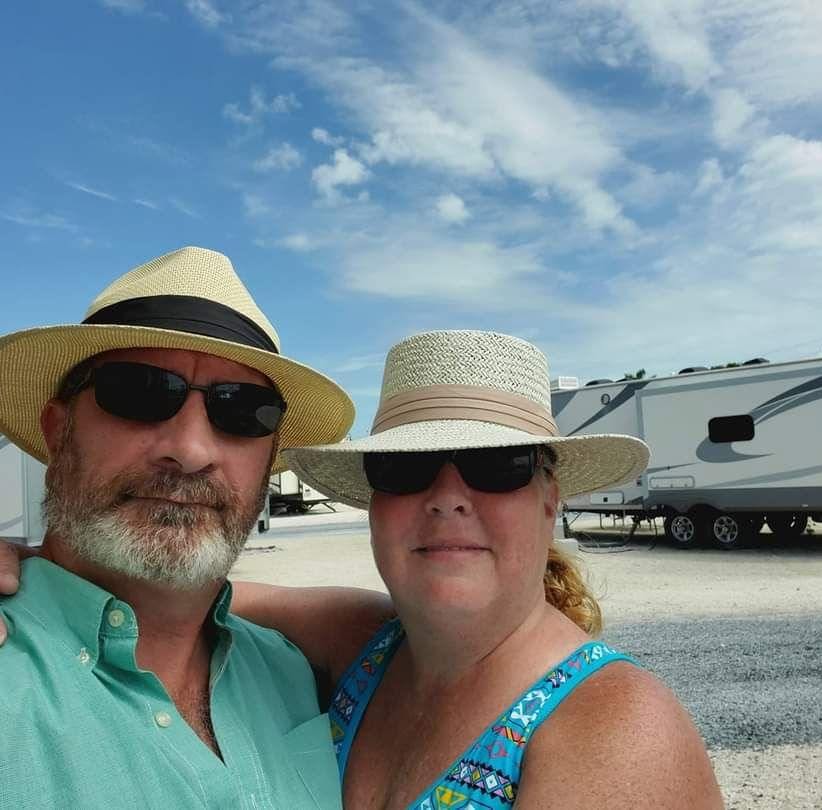
We’re Joe and Jana Martin. We spent four years RVing full-time, including eight months in the Florida Keys, and we’re preparing for another chapter of travel. This page is our guide to evaluating reviews and the standards we use when discussing campgrounds. It does not claim that we have personally stayed at every campground or brand mentioned, and it is not a list of invented firsthand reviews.
Begin with your own stay requirements
Write a short list before browsing. Include the RV and any additional vehicle, travel dates, length of stay, required services, pets, work needs, and the features that would make a site unsuitable. Put these requirements ahead of preferences such as a view or a particularly attractive picnic area.
Separate a necessity from something you would enjoy. If reliable access to a particular service is essential, a review saying the campground felt peaceful does not answer that question. If you simply want a pleasant weekend outdoors, a reviewer complaining about limited entertainment may be describing something that does not matter to you.
Choose the questions the reviews need to inform. Can our setup reach and use the site? Will the ordinary routine work? Are the conditions likely to suit our dates? What must we verify directly? Our campground planning guide turns those questions into a reservation and arrival checklist.
Check the date and context of the stay
Look for when the reviewer actually visited, not only when the review was posted. A description from a quiet shoulder-season week may not represent a busy holiday weekend. Weather, vegetation, staffing, maintenance, and neighboring activities can change the experience even when the campground itself has not changed ownership.
Identify the type of equipment and site involved. A small campervan, a Class C motorhome, and a long towing combination may face different access and parking questions. An easy pull-through arrival does not establish that a tight back-in site elsewhere in the park would work equally well.
Notice the length and purpose of the stay. An overnight traveler may value quick highway access. A month-long guest may care more about laundry, utilities, mail rules, and the feel of an ordinary weekday. Neither review is automatically better. The useful one is the one whose context you can compare with your own.
Read the text before trusting the score
A low rating may describe a serious practical problem, a disagreement over a clearly stated rule, or a preference that you do not share. A high rating may reflect a genuinely useful stay or simply a friendly interaction. Read the reasons and decide which of them affect your requirements.
Look for specific observations. “The site was unsuitable” leaves questions. “Our slide could not open without entering the neighboring pad” gives you something to ask the operator about. Useful details connect an observation with the site, equipment, time, or circumstances that produced it.
Avoid turning a single review into a universal conclusion. Repeated recent reports about the same issue deserve attention, but you still need context. A cluster of comments about a construction project may concern a temporary situation. An apparently isolated access problem may still matter greatly if your RV resembles the reviewer’s setup.
Compare several sources without creating an endless search
Start with a manageable group of recent, relevant reviews and the operator’s current information. Add another source when an important question remains unclear or the descriptions conflict. Collecting hundreds of comments can increase uncertainty if you never return to the requirements that started the search.
The FTC’s guide to evaluating online reviews encourages readers to think critically about review information and the source. A detailed profile or a persuasive photograph does not by itself prove a review is authentic. Equally, an unhappy tone does not automatically make a review false.
Treat suspicious patterns as reasons to verify rather than opportunities to accuse someone publicly. Generic praise, repeated language, or an unusual burst of reviews can prompt more careful checking, but they do not establish the full story. Make your booking decision from useful evidence and confirmed terms rather than trying to solve every mystery in the review section.
Review access from the road to the parking pad
Look for information about the correct entrance, approach roads, turns, grades, overhead clearance, branches, and the route through the campground. A site’s advertised length is only one part of the fit. You still have to reach it, position the RV, and use the space required by doors and slides.
Ask the operator how site measurements are defined and whether the stated limit includes a tow vehicle or additional car. Provide your actual setup details. If the answer is vague, request clarification before making a nonrefundable commitment. A reviewer’s success with a shorter or differently configured rig does not settle your own fit.
The National Park Service’s campsite guidance specifically advises RV visitors to check individual parks for accommodation and size limitations. Apply that habit wherever you stay. A photograph and a map pin are useful research aids, but they are not a clearance assessment for your vehicle.
Read site photographs as evidence with limits
Photographs can reveal the relationship between the pad, picnic area, service connections, neighboring sites, and surrounding vegetation. Look for multiple angles when available. Notice whether the photo actually shows the site type you are considering or a particularly attractive location elsewhere in the campground.
Check the date and source where possible. Trees grow, branches change, landscaping is maintained, and construction alters access. A wide-angle photo can also make spacing difficult to judge. Use visual clues to identify questions rather than measuring important clearances by eye from an unknown camera position.
If a detail would determine whether you can use the site, ask for current information. Explain the specific concern: room for a slide, the position of a sewer connection, parking for an extra vehicle, or access to a facility. A focused question is easier to answer than asking whether the campground is generally big-rig friendly.
Separate available hookups from suitable hookups
A listing saying full hookups does not describe every detail of the connection arrangement. Confirm the services, ratings, locations, and any limits relevant to your own RV. Ask what is included in the reservation and what equipment you must supply. Follow your manufacturers’ instructions when selecting and using equipment.
Reviews about hookup problems can help you know what to ask, but they should not become a do-it-yourself troubleshooting manual. A previous guest’s workaround may be inappropriate for your rig. If equipment looks damaged or the arrangement appears unsafe or incompatible, stop and seek qualified help from the operator or an appropriate professional.
For a longer stay, ask about utility billing, usage rules, maintenance interruptions, and whom to contact after office hours. Keep the answers with the booking. Our RV gear and apps guide helps you build an equipment list around confirmed requirements rather than around another reviewer’s accessories.
Interpret Wi-Fi and cell-signal comments carefully
Find out what the reviewer was trying to do. Sending a message, streaming a video, making a work call, and uploading a large file are different tasks. A statement that the internet worked well is more useful when it includes the connection, location, timing, and type of use.
Consider whether the report concerns campground Wi-Fi, a cellular connection, or another service. Those are not interchangeable. Conditions can differ across sites and change with equipment, network demand, and the service used. A single successful test does not promise uninterrupted access for your own stay.
If paid work depends on connectivity, prepare an appropriate backup and verify your employer’s or client’s requirements. You may need a different campsite, a longer stay near services, or an approved alternative workspace. Our road income guide connects the campsite decision with the work commitments it needs to support.
Decide which kinds of noise matter to you
Reviews often use quiet as a single category, but road traffic, trains, generators, nearby businesses, campground activities, and neighboring conversations are different experiences. Identify the source and timing when possible. Something noticeable during dinner may have a different effect from an interruption during your usual sleeping hours.
Ask about quiet hours and the rules relevant to generators or organized activities. Check the location of the proposed site within the property. A review from the far side of the campground may not describe the sites beside a road, playground, office, or maintenance area.
Keep expectations connected to the type of stay. A lively family campground and a remote campground can both provide enjoyable visits for different travelers. The question is whether the setting fits the trip you want, not whether one person’s idea of a perfect campground must apply to everyone.
Look beyond a facility being listed
For bathrooms, showers, laundry, accessible facilities, and other shared spaces, look for recent information about condition and availability. A facility can appear on a campground map while being temporarily closed or operating on restricted hours. Verify a feature directly when your stay depends on it.
Consider the journey between your site and the facility. Distance, surface, lighting, steps, weather exposure, and parking may matter more than the presence of the facility alone. Ask precise questions about accessibility rather than relying entirely on a general accessible label or another traveler’s description of an easy walk.
Pet facilities deserve the same attention. Confirm current rules, restrictions, designated areas, and the practical route from your site. A photograph of a pet area does not establish that the rest of the campground’s rules fit your animals. Keep the relevant policy with your reservation so everyone in the household knows the arrangement.
Compare the complete stay cost
Start with the actual offer for your dates and setup. Identify taxes, reservation charges, utility billing, additional vehicle or guest charges where applicable, and any other required costs. Distinguish a refundable deposit from a final expense while remembering that the money may be temporarily unavailable.
Read the cancellation, change, early-departure, arrival, and payment terms. A reviewer may call a campground expensive because of a charge that was disclosed, or may identify a genuinely confusing part of the booking process. Use the comment to check the current terms rather than assuming the reviewer’s exact bill applies to you.
Compare value against what you will use. A campsite with facilities you do not need may still be attractive, but those facilities do not automatically justify a higher price for your household. Conversely, a site closer to work or necessary services may have practical value beyond its scenery. Our RV budgeting guide keeps these tradeoffs visible.
Use a short verification message before booking
Send a focused list of questions the operator can answer. Include the intended dates, your equipment dimensions and arrangement, the proposed site type, pets where relevant, and the details that affect your decision. Keep the message factual rather than opening with allegations based on an unfamiliar reviewer’s account.
For example: “We’re considering a seven-night stay with a Class C motorhome and a separate car. Can you confirm where the car would park, the services at this site type, the total mandatory charges, and any current access restrictions?” Add your own actual dimensions and requirements. Do not copy sample equipment details that do not match your rig.
Save the reply and reservation together. If the answer leaves an essential question unresolved, clarify it before paying. A simple record of what was confirmed is easier to use at arrival than a collection of screenshots scattered across several apps and email threads.
Use a review scorecard that reflects your priorities
Create headings for access, site fit, services, ordinary comfort, location, rules, total cost, and unresolved questions. Under each, write a short evidence note and the date. Mark whether it came from your own stay, another traveler’s observation, an operator response, or official information.
You do not need a complicated numerical formula. A practical result might be “fits our rig, current utility details confirmed, road noise still uncertain.” If one unresolved item would make the stay unsuitable, a high average score elsewhere does not cancel it out. The scorecard is meant to support a decision, not manufacture certainty.
Choose the next action from the unanswered questions. Verify, choose a different site, shorten the commitment, or select another campground. After a stay, update the record with your own observations so the next decision starts with information you understand rather than another complete search from scratch.
How we distinguish firsthand experience from research
When we describe a firsthand stay, the useful details include when we stayed, the equipment and site involved, what we observed, and what has not been rechecked. A personal experience is valuable without being universal. The same campground can produce a different stay for another traveler, date, or site assignment.
A researched guide should be labeled and written as research. It can compare published features and explain what to verify, but it should not imply we personally parked there, used the laundry, or tested the connection unless we did. Illustrative artwork is not evidence of a campground visit.
Any relevant commercial relationship should be disclosed clearly. Recommendations should remain specific about what is known and what is uncertain. You can read our disclosure and About page for more context about the site. We would rather give you a useful question than a confident claim we cannot support.
Common questions about campground reviews
Should I avoid every campground with a bad review?
No. Read the reason, timing, site type, and response where available. Decide whether the issue affects your requirements and whether current information resolves it. A serious unresolved concern may be enough to choose elsewhere, but the star rating alone does not explain the situation.
Can a review tell me that my RV will fit?
It can provide clues, especially when the reviewer gives relevant dimensions and site details. Confirm your own setup with the operator and reliable current information. Access roads, turns, overhead clearance, parking, and slide space matter alongside the advertised pad length.
Are photos more trustworthy than written reviews?
Photos are useful evidence with their own limits. Check whether they show the relevant site, date, angle, and conditions. Use them with descriptions and operator confirmation. Neither a flattering photograph nor an alarming close-up should carry the entire booking decision without context.
What should we record after our own stay?
Write the campground, dates, site, RV setup, access experience, service details, ordinary comfort, and the total cost you actually paid. Distinguish an observation from an assumption. Note what you would ask before returning, and avoid sharing another guest’s private information in your review.
Turn the reviews into a reservation you understand
Choose one promising campground, list the requirements you can confirm, and identify what remains unresolved. Verify the important details before booking. Campground reviews become more useful when they lead to a clear next step rather than another hour of scrolling.
Continue with campground planning for the reservation process, RV destinations for choosing where to stay, and daily road life for making the campsite work once you arrive.
Practical tools to compare before buying
Start with the problem, the equipment you already own, and the space available. These links open Amazon product searches so you can compare options. They are not claims that we tested every product, that every result suits your RV, or that you need all five categories. Keep what serves your actual plan and skip what does not.
Travel review notebooks
Record the specific site, dates, rig, conditions, and observations while they are fresh. Separate firsthand experience from research and clearly note what you could not verify. A consistent record supports a useful review without inventing certainty.
Compare travel review notebooks on Amazon (paid link).
Before deciding, check the current listing, seller details, specifications, and instructions. Compare the complete cost and storage needs with a practical alternative you may already have. Choose for the task and your own setup rather than the number of features in an advertisement.
Measuring tapes
Where safe and permitted, measurements can clarify a site feature you are documenting. Record what was measured and how. A measurement from one pad or visit does not establish that every site fits the same rig or that conditions will remain unchanged.
Compare measuring tapes on Amazon (paid link).
Before deciding, check the current listing, seller details, specifications, and instructions. Compare the complete cost and storage needs with a practical alternative you may already have. Choose for the task and your own setup rather than the number of features in an advertisement.
Covered clipboards
A simple checklist can make observations consistent across a stay. Use it for site fit, services, access, everyday facilities, and unresolved questions. Keep private reservation and identity records separate from notes intended for a public review.
Compare covered clipboards on Amazon (paid link).
Before deciding, check the current listing, seller details, specifications, and instructions. Compare the complete cost and storage needs with a practical alternative you may already have. Choose for the task and your own setup rather than the number of features in an advertisement.
Document files
Keep booking terms, written confirmations, and relevant records accessible. Distinguish what was advertised, what was confirmed, and what you actually experienced. Avoid including personal account information when sharing evidence or writing a review.
Compare document files on Amazon (paid link).
Before deciding, check the current listing, seller details, specifications, and instructions. Compare the complete cost and storage needs with a practical alternative you may already have. Choose for the task and your own setup rather than the number of features in an advertisement.
Rechargeable inspection lights
A suitable light can help observe accessible details while safely parked and permitted to inspect. It does not make an unsafe connection suitable or justify disturbing campground equipment. Report concerns to staff and seek qualified help rather than experimenting.
Compare rechargeable inspection lights on Amazon (paid link).
Before deciding, check the current listing, seller details, specifications, and instructions. Compare the complete cost and storage needs with a practical alternative you may already have. Choose for the task and your own setup rather than the number of features in an advertisement.