Daily road life built around comfortable, ordinary days
Daily road life becomes easier when you plan for breakfast, laundry, work, pets, and a rainy afternoon as carefully as you plan the scenic stops. An RV can take you somewhere beautiful, but it also has to function while someone looks for a clean shirt and the dishes need washing. A few dependable routines make more room for enjoying the place you came to see.
This article contains paid Amazon links. As an Amazon Associate I earn from qualifying purchases. Product suitability depends on your equipment and needs; check current details before buying.
In this guide
- Choose your rhythm before filling the calendar
- Give arrival a clear finish line
- Use storage zones based on tasks
- Build a small menu you can repeat
- Keep cleanup small enough to finish
- Plan laundry before the last clean outfit
- Share a small space deliberately
- Make pet routines part of the travel plan
- Protect time for paid work
- Give departure its own attention
- Build a rainy-day version of your life
- Use one weekly household check-in
- Common questions about everyday RV living
- Start with tomorrow morning
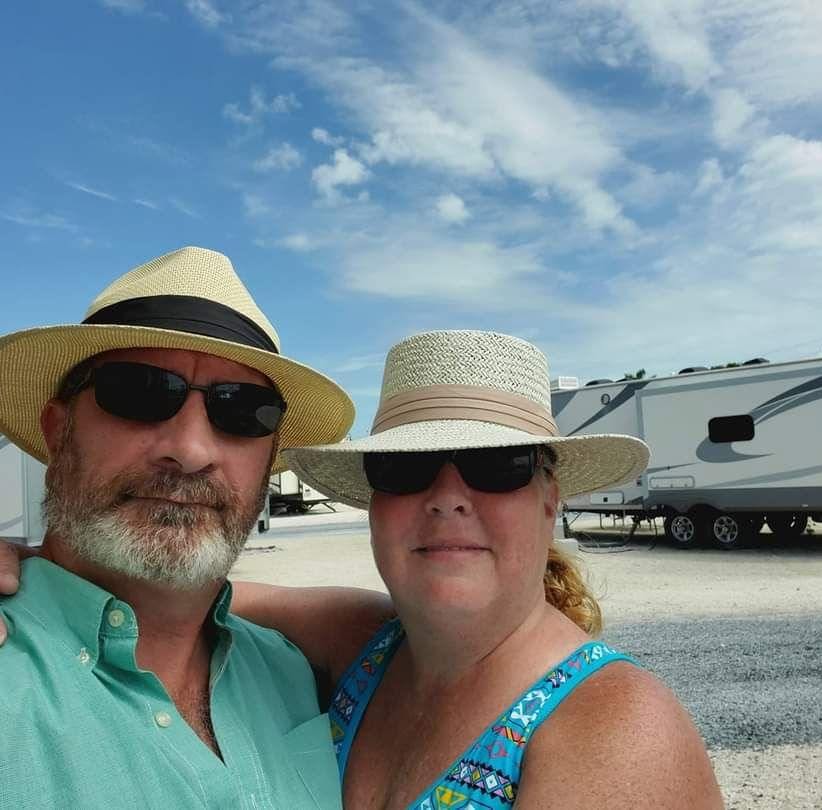
We’re Joe and Jana Martin. We spent four years RVing full-time, including eight months in the Florida Keys, before taking a break to homestead. Now we’re preparing for another chapter on the road. Our experience has made us interested in travel that fits real life, with enough flexibility to change the plan when a different pace works better.
Choose your rhythm before filling the calendar
Start with the responsibilities that need to happen during a normal week. Include work, errands, meals, personal care, RV upkeep, and time together. Then decide how often you want to move. A route that looks manageable in miles may leave little room for those ordinary tasks once packing, travel, arrival, and setup are included.
Try separating days by purpose. A travel day can focus on getting to the next campsite comfortably. A settling-in day can cover groceries, laundry, and learning the area. An exploring day can have more open time. Your schedule may combine these jobs, but naming them prevents every day from quietly becoming a moving day and an errand day and a sightseeing day.
Leave some periods unassigned. Weather, a useful conversation, an unexpected service appointment, or simply wanting to stay put can change a trip. An empty afternoon is not wasted travel. It may be what lets you enjoy the next outing without feeling that the whole journey has turned into an appointment schedule.
Give arrival a clear finish line
Use the parking and setup sequence appropriate to your own vehicle. Keep the relevant manuals and checklists available, and pause when something looks unfamiliar. Once essential setup is complete, decide which household tasks truly need doing immediately. Not every outdoor item has to be unpacked before you can sit down.
Create a short arrival routine for ordinary needs. Locate the items required for the first meal, make the sleeping space usable, and check where tomorrow’s clothes and personal supplies are stored. If you have pets, follow a secure arrival routine before opening doors or setting up outside. A calm first hour helps the site begin to feel like a place to stay.
Save optional decorating and reorganizing for later. When a short overnight stop requires the same elaborate setup as a month-long stay, you create extra work at both ends. Keep a small version of your campsite routine for brief stops and a more comfortable version for longer stays. Our campground planning guide helps you prepare the details before arrival.
Use storage zones based on tasks
Organize around how you use the space: cooking, sleeping, personal care, outdoor time, work, and departure. Keep frequently used items within practical reach and make sure everything has an appropriate secure travel location. A cabinet being empty does not mean it is the right place for the heaviest or most awkward item.
Pay attention to the moment of use. If a morning task requires moving the same box every day, the box’s location deserves another look. If an item is needed immediately after parking, burying it behind less important supplies creates an unnecessary unpacking project. Make adjustments to solve the repeated problem rather than buying a complete set of organizers first.
Agree on personal storage as well as shared storage. Each person benefits from a little space that does not require negotiating every item. Measure before adding containers and check that doors, drawers, exits, and access to essential equipment remain usable. Our gear and apps guide includes a practical way to evaluate purchases against the space they require.
Build a small menu you can repeat
Choose a handful of meals using overlapping ingredients and the equipment already available. A simple breakfast, a flexible lunch, and two or three dependable dinners can reduce both shopping decisions and food waste. Keep a quick meal available for a late arrival or an evening when outdoor cooking does not fit the conditions.
Plan around refrigerator capacity and the appliance’s instructions. Do not fill limited space with food you cannot store properly. For a short stay, buying smaller quantities may be more practical than buying a large package because it appears cheaper per serving. Include storage, preparation, cleanup, and leftovers in the decision.
Food safety still applies at the campsite. The FDA’s outdoor food-handling guidance explains keeping cold perishables at 40°F or below until serving. Use appropriate thermometers and follow current guidance for cooking, cooling, and time outside temperature control. A cooler feeling chilly is not the same as knowing the food has been held safely.
Keep cleanup small enough to finish
Choose a regular reset point, such as after breakfast or before the evening settles down. Put everyday items away, deal with dishes and rubbish, and check what needs attention tomorrow. A short reset prevents the next task from beginning with a search for counter space.
Match cleaning methods to the materials, appliances, water system, and waste arrangements in your RV. Follow manufacturer instructions and use suitable products. More fragrance or a stronger chemical is not automatically a better solution. If a persistent smell, leak, or system problem appears, identify the cause rather than covering it with another product.
Keep a small supply list instead of buying duplicates whenever something is difficult to find. Record what is running low in one shared place. During a travel day, securing supplies correctly takes priority over finishing an ambitious cleaning project. Leave the deep reorganization for a stay with time, room, and the right disposal facilities.
Plan laundry before the last clean outfit
At the start of a longer stay, check where you will do laundry, the operating hours, payment method, and any rules affecting pets or parking. Confirm the facilities directly when access is important to your plans. A campground description saying laundry is available does not tell you whether every machine will be usable when you need it.
Choose a workable laundry trigger. That might be a particular day or a minimum supply of clean clothing. Keep the necessary supplies and payment method together. If the facilities are off-site, consider what else can be completed nearby without turning a straightforward errand into an exhausting all-day route.
Review the clothing you actually use. A smaller, useful collection can make storage and washing easier, but the right amount depends on climate, work, activities, and access to facilities. Avoid downsizing to a number that requires constant washing or makes one wet afternoon a clothing emergency. Build the routine around the trip you are taking.
Share a small space deliberately
Talk about quiet, conversation, sleep, visitors, and the time each person needs alone. An RV makes it easier to notice different habits because there are fewer rooms between them. Discuss those differences as practical arrangements to solve rather than as evidence that one person is traveling incorrectly.
Agree on a few repeatable boundaries. One person might need a quiet hour in the morning. Another might want the dining area cleared by a certain time. If work calls are involved, decide when and where they can happen. Make the agreement specific enough that neither person has to guess what “I need some space” means that day.
Revisit responsibilities instead of assuming an arrangement must remain permanent. Driving, route research, bookings, cooking, bills, and setup can carry different mental loads. Both travelers should be able to locate essential information and understand important plans. Sharing the journey works better when one person is not the only keeper of every reservation and operating detail.
Make pet routines part of the travel plan
List feeding, water, toileting or litter needs, secure travel arrangements, records, and the supplies your animals use. Confirm campground rules and relevant travel requirements before reserving. A pet-friendly label can still include restrictions that matter to your particular household.
Practice arrivals and departures with secure containment appropriate to your animals. Think through doors opening, unfamiliar people outside, and where supplies are kept while the RV is being packed. If your pet needs veterinary guidance about travel, identification, medication, or behavior, arrange that with the veterinarian before a demanding trip.
Do not assume the conditions inside a parked RV will remain suitable while you are away. Weather, power, ventilation, and equipment failures can change the environment. Make a plan based on your animals’ needs and professional advice, and choose activities and stays that let you care for them appropriately. An app or monitoring device can be an aid, not a guarantee.
Protect time for paid work
Put deadlines and scheduled calls on the calendar before adding drives and outings. Check the actual work requirements and any employer approvals. If a campground connection is essential, research and test the arrangement rather than assuming the advertised Wi-Fi will support it.
Create a clear setup and closing routine for work. Keep equipment and records stored securely, and agree on when shared surfaces return to household use. A small space can begin to feel like a permanent office when work has no defined finish. Closing the laptop is easier when tomorrow’s next step has already been written down.
If income is still developing, avoid scheduling every free hour as business-building time. The household still needs food, care, rest, and a functioning campsite. Our road income guide helps you compare work models and build a trial week that includes administration, payment timing, and interruptions.
Give departure its own attention
Use the departure checklist for your vehicle and equipment, including any towing arrangement. Keep important operating tasks separate from breakfast, messages, and destination debates. If a step is interrupted, return to a clear point in the sequence instead of assuming it was completed.
Pack optional household items early when practical. Leave the supplies you still need accessible, then secure them as part of the final routine. Check the campsite for belongings and follow the campground’s waste and departure rules. A second appropriate check can help when two people share responsibilities.
Do not turn a missed departure target into a reason to rush. Communicate with the campground or next destination when needed and adjust the day. Leaving ten minutes later with the required checks completed is a more useful outcome than meeting an arbitrary time while wondering what you forgot.
Build a rainy-day version of your life
Imagine everyone staying inside for an ordinary afternoon. Can you sit comfortably, prepare food, reach the bathroom, work if required, and keep pets settled? Use that picture when deciding what to pack and where things should go. A floor plan should support more than perfect outdoor weather.
Keep a small collection of activities you enjoy without a complicated setup. Books, a hobby, a downloaded film, a game, or a project may fit, depending on your interests and available power. Choose what you would actually use rather than packing an entire imagined future personality into a cupboard.
Weather can also change the itinerary. Check reliable current forecasts and relevant official instructions, and know where the campground directs guests during severe conditions. A comfortable indoor afternoon and a situation requiring a change of location are different problems. Plan for both without expecting your normal routine to answer every circumstance.
Use one weekly household check-in
Set aside a brief period to review the coming week. Look at bookings, work, laundry, groceries, vehicle needs, personal commitments, and spending. Ask which day is already too full. Move one task before the calendar becomes a series of preventable rushes.
Include what is working. Perhaps longer stays are helping, a storage change has removed a daily irritation, or breakfast is finally simple. Keeping those successes visible prevents a review from becoming only a list of mistakes. Choose one or two changes for the next week rather than redesigning the whole trip.
Keep notes short enough to maintain. A shared calendar and a single task list may be sufficient. If one traveler dislikes an elaborate app, agree on another format that both can use. The system should reduce the number of conversations you have to repeat, not become a new household job.
Common questions about everyday RV living
How long should we stay in one campground?
There is no universal length. Consider work, energy, errands, budget, the campground’s rules, and what you want to experience nearby. Try staying longer if frequent moves leave little time for ordinary life. Use our RV destinations guide to connect the destination with a pace you would enjoy.
Does every item need to serve several purposes?
No. Some equipment has one essential job, and personal enjoyment matters too. Multi-use items can save space, but an awkward tool that performs several jobs badly may add frustration. Evaluate usefulness, compatibility, secure storage, and how often you realistically use the item.
How do we divide tasks fairly?
Discuss the work involved, including planning and remembering. One person completing a visible task may depend on another person having researched, booked, and prepared for it. Agree on ownership, share essential information, and revise the arrangement when circumstances change. Fair does not have to mean identical.
What if full-time travel feels too busy?
Look first at the pace and the commitments rather than deciding you have failed at RV life. Fewer moves, a smaller activity list, or a different work arrangement may help. A seasonal stay or a break can also be a valid choice. Your travel plan should support your household, not require constant endurance.
Start with tomorrow morning
Choose one repeated irritation and make one small change. Put breakfast supplies together, decide who handles check-in, locate the laundry before you need it, or agree on a quiet work period. Daily road life improves through routines you can repeat comfortably.
For your next planning step, explore road wellness, revisit your RV budget, or work through a first camping trip. The aim is a home on wheels that leaves enough room for the life you wanted to enjoy.
Use a household reset when the routine stops working
A routine that worked during a quiet week may fail when work deadlines, rain, or extra travel arrive together. Rather than rewriting every rule, identify the specific point where the day becomes difficult. Perhaps dinner starts too late because groceries are packed behind travel gear. Perhaps laundry takes the entire morning because the facility is farther away than expected. Name the friction before choosing a solution.
Try a fifteen-minute household conversation while parked and rested. Each person names one task that is working, one recurring frustration, and one change they would like to try. Keep the request observable: clear the table before the workday, prepare tomorrow’s lunch after dinner, or put clean laundry away before the next outing. Avoid turning a small storage problem into a judgment about the other person.
Choose one experiment for the next three days. Decide who owns it and what success looks like. Moving the breakfast supplies into an accessible cupboard may save more time than buying another organizer. Leaving one evening unplanned may solve the feeling that every day is crowded. If the experiment creates another problem, adjust it without treating that as a failure.
Before the next move, restore the travel arrangement and review anything that was temporarily relocated. Household convenience while parked must fit the RV’s safe travel requirements. Keep controls, ventilation, and exits accessible, and follow the vehicle’s instructions for securing belongings. A workable home routine supports a careful departure instead of competing with it.
Practical tools to compare before buying
Start with the problem, the equipment you already own, and the space available. These links open Amazon product searches so you can compare options. They are not claims that we tested every product, that every result suits your RV, or that you need all five categories. Keep what serves your actual plan and skip what does not.
Food-storage containers
Plan a realistic set of meals and check the pantry and refrigerator before choosing containers. Compare food-contact suitability, dimensions, closure, and cleaning instructions. Keep information needed for allergens, preparation, or identifying the contents.
Compare food-storage containers on Amazon (paid link).
Before deciding, check the current listing, seller details, specifications, and instructions. Compare the complete cost and storage needs with a practical alternative you may already have. Choose for the task and your own setup rather than the number of features in an advertisement.
Collapsible laundry totes
Choose a tote or bag around the loaded weight you can comfortably carry, facility access, and storage when empty. An existing laundry bag may work. Include towels, bedding, and the time needed to put clean items away in the routine.
Compare collapsible laundry totes on Amazon (paid link).
Before deciding, check the current listing, seller details, specifications, and instructions. Compare the complete cost and storage needs with a practical alternative you may already have. Choose for the task and your own setup rather than the number of features in an advertisement.
Packing cubes
Separate clothing by person or use only when that makes retrieval easier. Measure drawers and cabinet openings first. A simple repeatable system is more useful than several similar organizers whose categories nobody remembers.
Compare packing cubes on Amazon (paid link).
Before deciding, check the current listing, seller details, specifications, and instructions. Compare the complete cost and storage needs with a practical alternative you may already have. Choose for the task and your own setup rather than the number of features in an advertisement.
Zippered organizer pouches
Give keys, chargers, stationery, and other loose items a home near where they are used. Keep contents secure in travel and avoid placing pouches over controls or ventilation. Reduce duplicates before assuming another container is needed.
Compare zippered organizer pouches on Amazon (paid link).
Before deciding, check the current listing, seller details, specifications, and instructions. Compare the complete cost and storage needs with a practical alternative you may already have. Choose for the task and your own setup rather than the number of features in an advertisement.
Undated household planners
Put work, travel, appointments, chores, and personal time on the same practical calendar. Review actual time spent and adjust estimates. The planner should reduce repeated decisions rather than create a second administrative job.
Compare undated household planners on Amazon (paid link).
Before deciding, check the current listing, seller details, specifications, and instructions. Compare the complete cost and storage needs with a practical alternative you may already have. Choose for the task and your own setup rather than the number of features in an advertisement.